Siddhartha Gautam Buddha Campus is a public, community-based institution in Butwal Sub-Metropolitan City, Rupandehi, established in 1992 AD (2048 BS) by social activists, educationists, and local community members. It began with the TU-affiliated PCL humanities program and later expanded to +2, bachelor’s, and master’s level education.
The campus runs National Examinations Board (NEB)-affiliated school-level programs and Tribhuvan University-affiliated higher education programs in management and education.
Its growth has been shaped by community support, public funding, QAA accreditation, and gradual expansion of academic and physical infrastructure.
The campus combines school and university education within one institutional framework and has developed internal systems for academic quality, research, student support, administration, and community engagement.
Established: 1992 AD (2048 BS)
Type: Public, community-based campus
Location: Butwal Sub-Metropolitan City, Rupandehi, Lumbini, Nepal
Accreditation: QAA accredited by University Grants Commission (UGC)
Affiliation: National Examinations Board (NEB) and Tribhuvan University
+2 Programs: +2 Management, +2 Humanities, +2 Education
Master’s Programs: MBS, M.Ed.
Bachelor’s System: 4 years, annual system
Master’s System: 2 years, 4 semesters
Academic Departments: Management; Education and Social Science; Language and Literature
Administrative Sections: General Administration, Financial Administration, Examination Administration, Library Administration
Major Academic Support Units: IQAC, Research Management Cell, EMIS, ECA Committee, Practice Teaching Committee, Employment Management and Student Support Committee
Library Holdings: 21,917 text and reference books, 250 newspapers and magazines, 140 research journals
Key Student Support: Scholarships, freeship, internal examinations, retake provision, remedial classes, research support, health desk
Shift Structure: Master’s in the morning, bachelor’s in the morning, Class 11 and 12 in the day shift
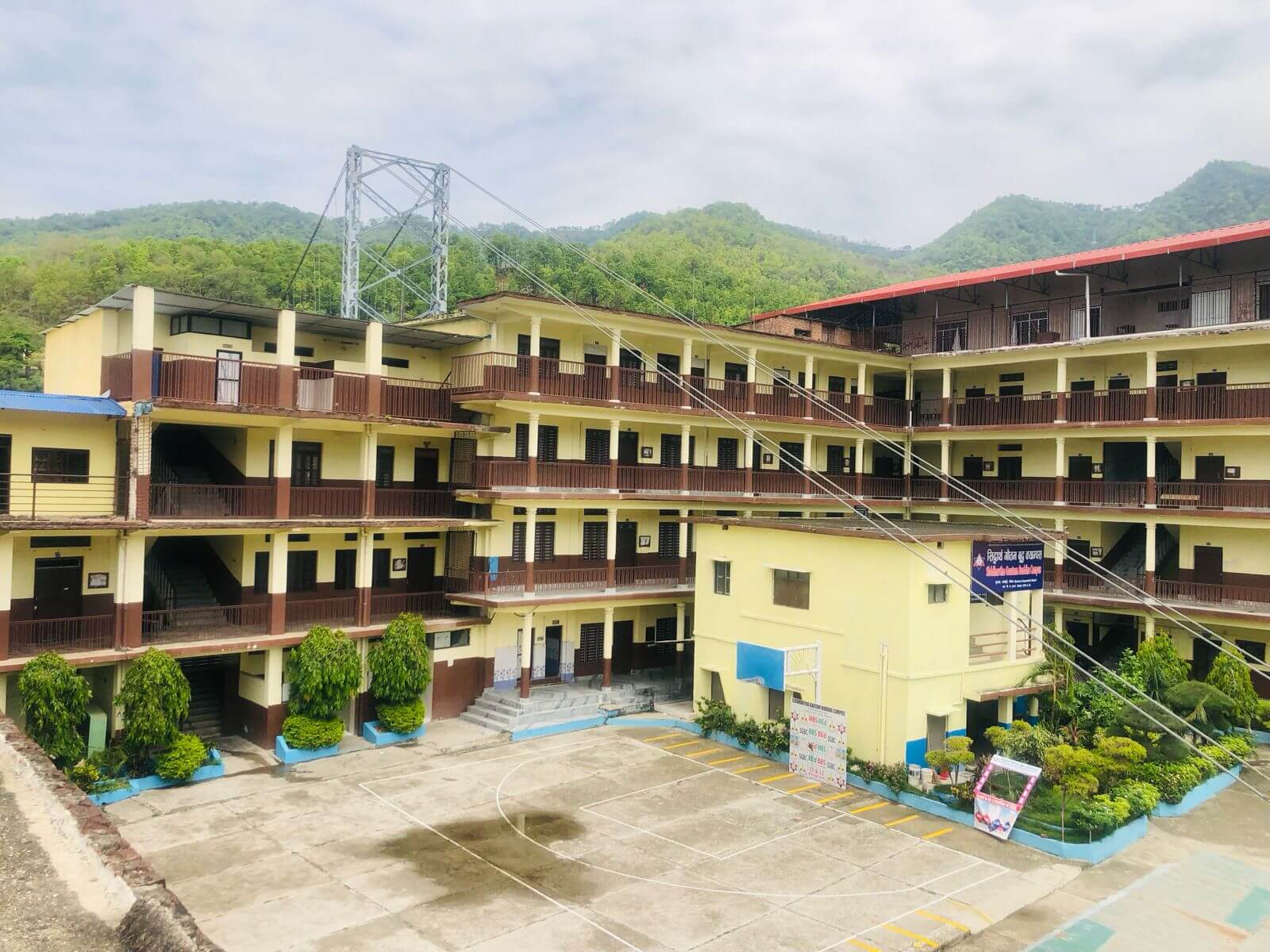
Siddhartha Gautam Buddha Campus was founded with the aim of making education accessible to students of Butwal and surrounding districts. In its early phase, the campus operated from the premises of Shree Kanti Boarding School and later shifted to its present location after a ministry-level cabinet decision permitted the campus to run classes there. With support from the Campus Management Committee and the local community, the institution gradually developed its own buildings and academic facilities.
The campus began with a Tribhuvan University-affiliated PCL humanities program and later expanded its academic scope in response to public demand. It upgraded to bachelor’s and master’s level education in education and management and also began +2 programs under NEB. Over time, it developed into a multi-level institution serving students from Rupandehi and nearby districts such as Palpa, Gulmi, Arghakhanchi, Kapilvastu, Nawalparasi, Dang, Rolpa, Pyuthan, Syangja, Baglung, and Parbat.
Its institutional structure combines public accountability and academic administration. Governance and policy-making operate through the Campus General Assembly and the Campus Management Committee. Executive leadership functions through the Campus Chief and Assistant Campus Chief. Academic coordination is handled through heads of department, program coordinators, and class coordinators. Student academic participation is also recognized through the Student Quality Circle.
The campus has built a broad committee-based structure to manage quality assurance, administration, research, examination, infrastructure, student support, and community relations. These bodies include the Internal Quality Assurance Committee, Internal Audit Committee, Budget Formulation Committee, Human Resource Development Committee, Procurement Committee, Grievance Filing and Redressal Committee, Research Management Cell, Exam Management Committee, Practice Teaching Committee, Library and Infrastructure Management Committee, Educational Management Information System Committee, Corporate Social Responsibility and Health Desk Committee, Academic Audit Committee, Extra-Curricular and Co-curricular Committee, Employment Management and Student Support Committee, and Alumni Association.
A major institutional milestone came with Quality Assurance and Accreditation. The UGC Board certified the campus for QAA on 16 Poush 2075 for the first cycle. The campus has also submitted its SSR for the second cycle of accreditation and continues to organize its activities in line with QAA-guided quality systems.
The campus vision is to become an academic institution shaped by lifelong learning, research development, critical thinking, and inclusive education, with meaningful contribution to local and national community development.
Its mission centers on academic development through competent and dedicated human resources, affordable education, research activity, and service to marginalized and economically deprived students as well as the wider community.
The strategic priorities of the campus include:
Qualifying for re-accreditation by maintaining the quality standards recommended by UGC
Improving the teaching-learning environment
Promoting the institution as a research center through academic research activities
Developing physical infrastructure suited to changing academic needs
Strengthening long-term institutional sustainability
Building positive relations with stakeholders and the local community
These priorities connect academic planning with infrastructure development, student support, research, and public accountability.
Siddhartha Gautam Buddha Campus offers programs at +2, bachelor’s, and master’s levels.
The campus runs NEB-affiliated Class 11 and Class 12 programs in:
Ten Plus Two (+2) Management
Ten Plus Two (+2) Humanities
Ten Plus Two (+2) Education
These programs are two-year, full-time programs under the NEB framework. The campus schedule for Class 11 and 12 runs from 11:15 AM to 4:00 PM.
At the +2 level, the campus materials mention subject groupings linked with management, education, and humanities. In Management, subject areas include Account, Economics, Marketing, Hotel Management, Finance, and Business Studies. In Education and Humanities, the listed subject areas include CDL, Instruction Pedagogy and Evaluation, Nepali, English, HPE, and Population.
The campus offers Tribhuvan University-affiliated bachelor’s programs:
Bachelor of Business Studies (BBS)
Bachelor of Education (B.Ed.)
These are four-year annual-system programs. Bachelor’s classes run from 6:15 AM to 11:00 AM.
For BBS, the subject focus areas available at campus level include Accountancy, Finance, and Marketing. For B.Ed., the listed areas include English, Nepali, Health, and Population.
The campus offers Tribhuvan University-affiliated master’s programs:
Master of Business Studies (MBS)
These are semester-based programs of two years and four semesters. Master’s classes run from 6:00 AM to 9:00 AM.
For MBS, the focus areas include Accountancy, Finance, and Marketing. For M.Ed., the listed specialization areas include Health, Curriculum, Nepali, and English.
The academic structure is organized through three departments:
Department of Management
Department of Education and Social Science
Department of Language and Literature
The campus also operates through section-based administration and service support, including:
General Administration Section
Financial Administration Section
Examination Administration Section
Library Administration Section
IT Department
Sports Section
Students comparing programs may also find the Admission Process, Teaching Faculty, Pedagogy, Attendance, and Internal Examination, and Scholarships, Discounts, and Freeship sections useful.
Admission is opened through campus notices according to level and program.
Applicants are required to submit the prescribed application form within the admission deadline.
For Class 11 admission, students are required to appear in an interview conducted by campus authorities.
For bachelor’s level programs, applicants are required to sit for the SGBC Admission Test (SAT) conducted by the campus.
For master’s level programs, applicants must pass the TU CMAT or the admission entrance test conducted by the Dean’s Office of the concerned faculty.
After selection, students complete admission by submitting the required documents and paying the prescribed fees.
Academic registration, examinations, and result procedures follow the applicable NEB or TU system for the program concerned.
For document-related details, see the Required Documents section below.
Completed application or admission form
Two copies of marksheet or transcript up to the previous level
Two copies of character certificate
Two copies of transfer certificate or migration certificate, as applicable
Two recent passport-size photographs
For higher-level admission, students may also need the relevant degree transcript, certificate, or entrance test record according to the level and program.
The campus identifies experienced and dedicated faculty members as a central part of its academic work. Teaching is organized through departments, coordinators, committees, and institutional review systems rather than through routine classroom scheduling alone.
The teaching approach has expanded from traditional classroom delivery to student-centered and technology-supported methods. The campus applies interactive teaching methods, self-learning strategies, group discussion, paper presentation, seminar and workshop activities, case analysis, problem-solving exercises, practical experience, and project or fieldwork-based learning. Classes in semester-based programs are equipped with multimedia projectors, and classroom teaching is supported by presentation and discussion-based methods.
The campus also follows an attendance requirement. Students are expected to attend regular classes, with 80 percent attendance in each subject required for eligibility for annual or board examination.
Internal examination and remedial support are handled through an organized academic system:
The Examination Management and Result Improvement Committee conducts periodic internal examinations during the academic year.
Students unable to attend an internal examination for specific reasons may appear in a retake internal examination.
A fine of Rs. 100 per subject is charged for absence in any internal examination.
Additional coaching and remedial classes are available to support academic improvement and behavioral development.
Regular classes, internal examination, remedial support, and evaluation systems are part of the campus academic structure.
Research-related academic development is covered in the Research and Publication section.
Research is handled through the Research Management Cell (RMC), which has a defined role in academic development at the campus. The RMC conducts research-oriented activities for both faculty members and students and supports the campus goal of strengthening research culture.
Its main research-related activities include:
Conducting research-related activities periodically
Publishing the annual Siddhartha Research Journal
Organizing research-oriented training
Conducting research visits for faculty members and students
Providing mini research grants of Rs. 40,000 to faculty members according to research guidelines
Providing thesis writing support of Rs. 15,000 according to research guidelines
The campus has also planned further measures for research development, including study leave for M.Phil. and PhD, research tours, and additional research grants.
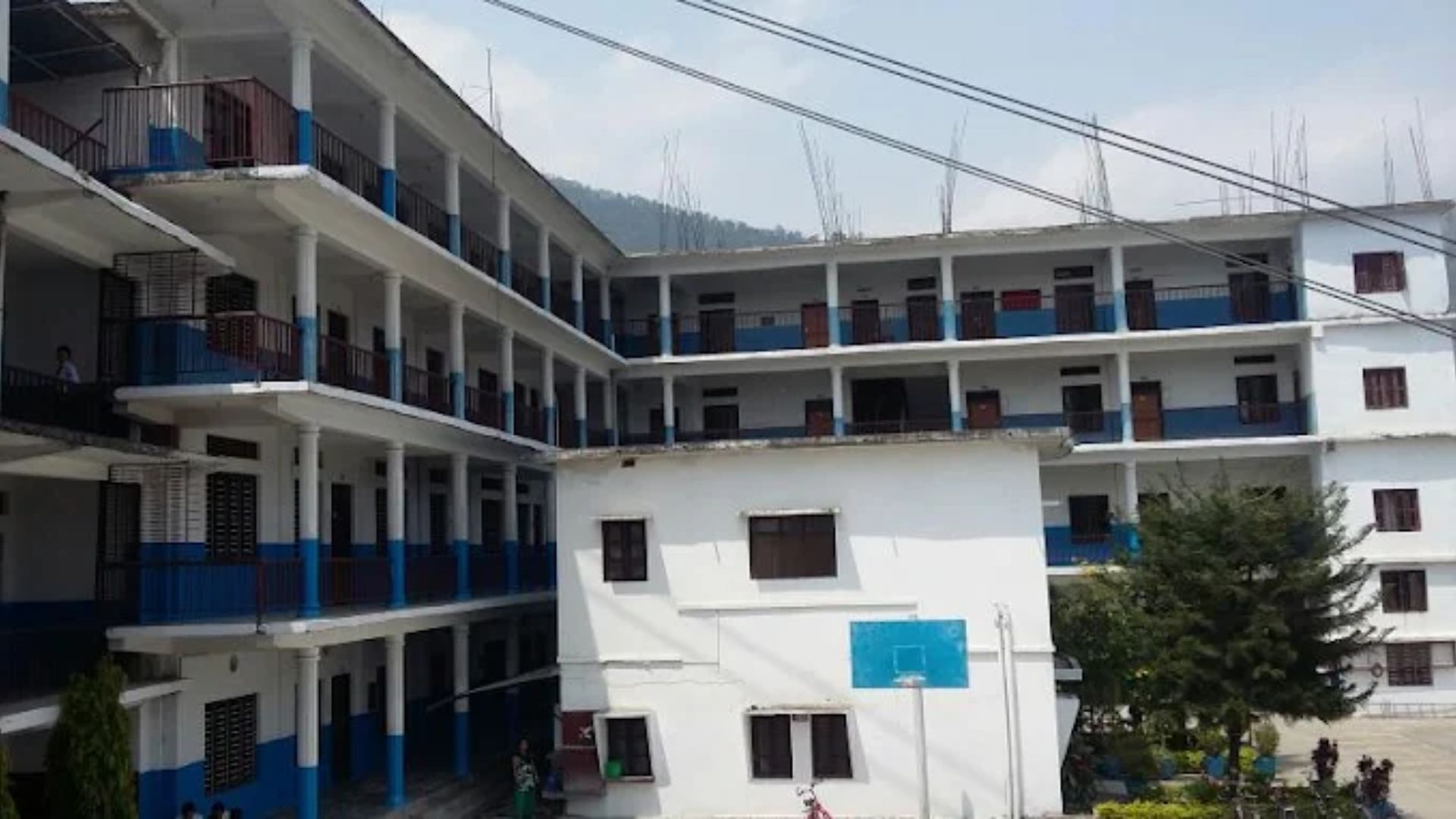
The physical and academic facilities of Siddhartha Gautam Buddha Campus are a major part of its current institutional profile.
0-8-12 kattha of land provided by the Government of Nepal
Five blocks in total
Three RCC structures and two normal cemented buildings
39 rooms for teaching and learning
20 rooms for offices, committees, academic and administrative units
7 store rooms
Guardians’ waiting shed
Program stage
Auditorium hall with capacity for 200 persons
Seminar hall with capacity for 60 persons
Canteen hall with attached rooms
22 restrooms
20 urinals
2 changing rooms for girl students
Health desk room with 2 beds and 1 stretcher
Six purified drinking water plants with normal and cold water facility
Three water pipelines with 73,000-liter capacity
One underground tank and 13 overhead tanks
20 LCD computers in the e-library and RMC
18 LCD computers for official use
2 laptop computers
1 main computer server
30 multimedia projectors
13 printers
3 scanners
2 photocopy machines
2 fax machines
4 inverters
1 electric silent generator
1 portable generator
CCTV system with 16 cameras
1 attendance machine
1 digital SLR camera
1 digital notice board
One library hall with counter
Three text zones
One reference zone
Two reading zones
One e-library
21,917 text and reference books
250 newspapers and magazines
140 research journals
Book issue facility for students
Library access for community members
Long-term plan to develop the library as a research center
850 sets of desk-benches for students
39 whiteboards and podiums
55 sets of official tables and chairs
120 normal chairs
29 steel file cabinets
2 safe deposit lockers
15 computer tables
4 steel book racks for departments
38 book racks for the library
One cemented basketball, volleyball, and badminton court
Two table tennis courts
Sports materials for volleyball, football, basketball, badminton, cricket, and shot put
The campus also notes one infrastructure limitation: it does not yet have sufficient land for expanded outdoor sports activities.
Student support related to financial aid is covered in the Scholarships, Discounts, and Freeship section.
The campus has a structured system of discounts, scholarships, and freeship.
50 percent discount on admission fee for the entrance topper in each faculty and program
Rs. 2,000 discount in admission fee for BBS and B.Ed. students who completed Class 12 from the campus
Rs. 5,000 discount in admission fee for MBS and M.Ed. students who completed BBS or B.Ed. from the campus
Rs. 2,000, Rs. 1,500, and Rs. 1,000 admission fee discount for students scoring A+, A, and B+ in Class 12
Rs. 2,000, Rs. 1,500, and Rs. 1,000 admission fee discount for students scoring 80 percent, 70 percent, and 60 percent in bachelor’s level study
Rs. 2,000, Rs. 1,500, and Rs. 1,000 admission fee discount for students securing first, second, and third position in national or international competitions
100 percent scholarship to the first topper and 50 percent scholarship to the second topper in annual examination of each faculty and class
50 percent scholarship to the first topper and 25 percent scholarship to the second topper in board examination of each faculty and semester
Freeship for 5 percent of total enrolled students from underprivileged, differently able, orphan, and marginalized groups according to campus guidelines
Full and partial scholarship support for economically and socially disadvantaged students
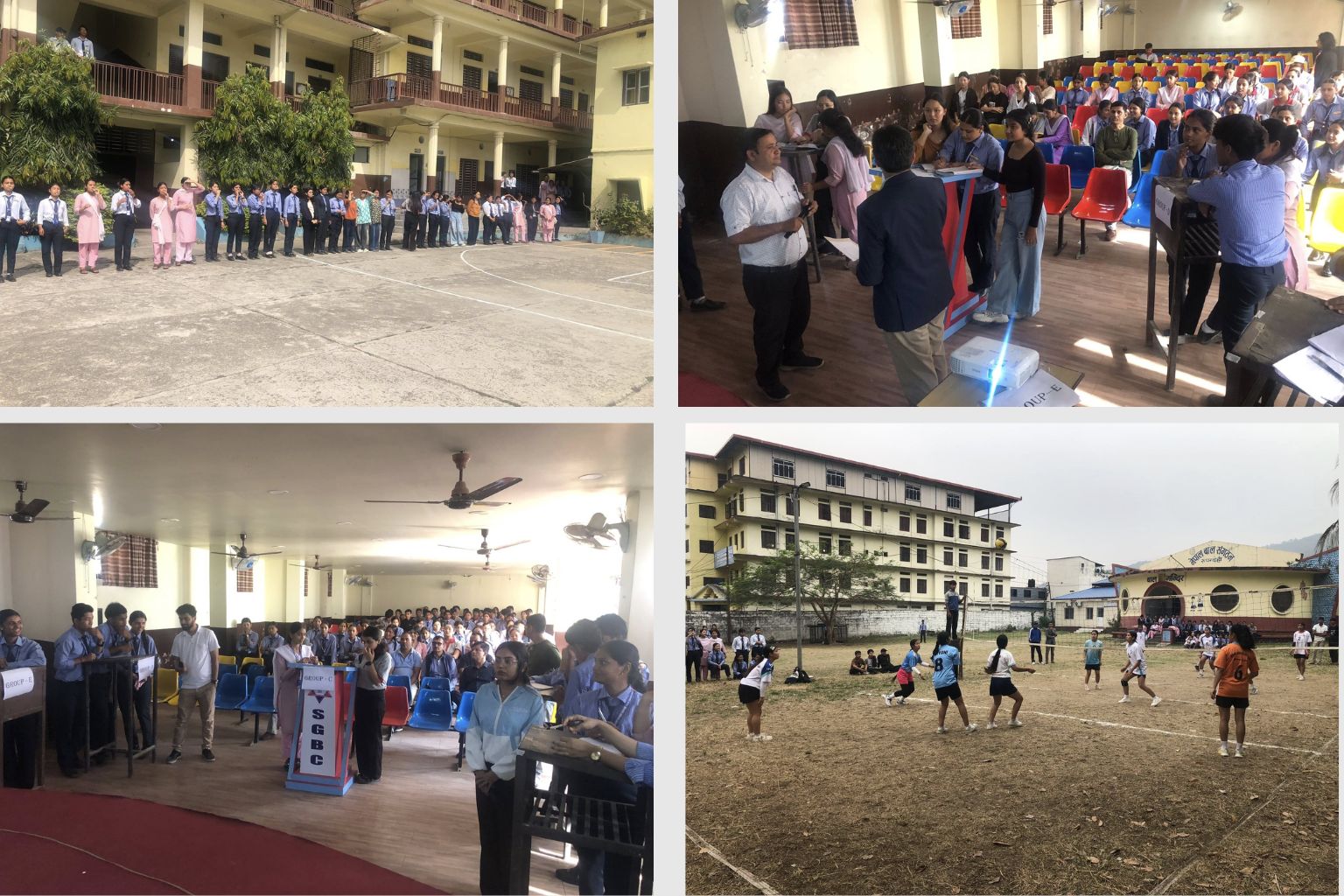
Student life at SGBC is supported through academic scheduling, campus services, extracurricular activity, and community-related programs. The multi-shift arrangement allows the campus to operate school-level, bachelor’s, and master’s programs in a structured daily routine.
The ECA Committee conducts educational tours, cultural programs, sports, and co-curricular activities. The campus also mentions meditation, yoga, and happiness programs for faculty members and students.
Its CSR-related work is handled through a dedicated committee structure. The CSR Committee maintains relationships with local government, community bodies, and other organizations, and takes part in activities such as:
Interaction programs with stakeholders
Awareness programs
Service-oriented programs
Health camps
The campus has also organized public awareness activities on occasions such as World Malaria Day, World Labour Day, World Literacy Day, World Autism Awareness Day, and World Environment Day.
Community support has played a significant role in the growth of the campus. The campus records support from public bodies, social organizations, donors, and local institutions.
Key contributions mentioned in campus materials include:
Kanti Higher Secondary School made its building and infrastructure available to the campus from its inception until 2058
District Coordination Committee and Western Nepal Truck Entrepreneurs’ Association constructed a well-facilitated rest room
Nepal-India Cultural Library donated 500 books of Hindi and English literature
Butwal Sub-Metropolitan City donated funds to upgrade the library
Butwal Sub-Metropolitan City contributed funds for a generator
Ward No. 5 of Butwal Sub-Metropolitan City donated funds for restroom renovation
The city council decided to support the campus in its upgradation toward a provincial university
Different political parties in Butwal made a unanimous decision to provide the kanji house area for development of the campus library
Transportation Workers Welfare Fund and local individuals donated steel cupboards
UGC funded the program hall and purified drinking water plant
UGC provided support after completion of the QAA cycle
UGC supported installation of projectors, new classroom furniture, and establishment of the Research Management Cell
The campus has also expanded its social relationship with educational, financial, medical, and corporate institutions through MoUs.
Established in 1992 AD (2048 BS)
Started with TU-affiliated PCL humanities
Expanded to +2, bachelor’s, and master’s level education
QAA certified by UGC on 16 Poush 2075
Submitted SSR for the second cycle of accreditation
Graded as the 17th public campus of the nation by UGC Nepal under HERP 2016–2020
Secured Nepal’s 1st and 3rd positions in the MBS 2nd Semester board examination in 2079 BS
Developed committee-based systems for research, quality assurance, examinations, student support, and administration
Built a multi-block campus with library, seminar, auditorium, e-library, and health facilities
The campus identifies several short-term and long-term issues and challenges. These include:
Need for more refresher, empowerment, research, and human resource development programs for faculty members
Management of +2 programs and related manpower
Disruptions to regular classes due to final examinations and political influence
Need to increase enrollment and pass percentage and reduce dropout rate
Need to increase student participation in internal examinations
Need for regular extra-curricular and co-curricular activities
Revenue deficit due to low fee structure
Teacher workload imbalance, especially with decreasing student numbers in the education stream
Lack of sufficient programs in priority areas
Need for stronger job placement support
Lack of enough land and physical infrastructure for new academic programs and broader student activities
The campus has outlined several responses to these challenges:
Study leave for M.Phil. and PhD
Research tours and research grants
Professional courses in the day shift
Interaction programs with political parties and student organizations to reduce disruption in teaching-learning
Scholarships, remedial classes, and skill development courses to improve pass percentage and reduce dropout
Planned operation of extra and co-curricular activities according to the campus calendar
Fee structure revision and cost-control measures
Extension of academic programs to address workload and sustainability
Strategic infrastructure planning for land and physical development
Environmental improvements including greenery, purified drinking water, and cleaner corridors
Inclusion of additional stakeholders in campus assembly
Planned future expansion into programs such as BBA, BBM, BIM, BSW, journalism, and B.Ed. options in Mathematics and ICT
The campus chief’s message presents the institution as one shaped by public concern, academic growth, and steady institutional expansion. It highlights the transition from PCL humanities to bachelor’s and semester-based master’s programs, the development of physical infrastructure at the present site, and the role of QAA accreditation in strengthening institutional systems.
The message also places emphasis on stakeholder support, cooperation among students and parents, and the responsibility of the campus as a community-based institution. It connects academic expansion with public trust, infrastructure development, and the challenge of sustaining progress through collective effort.
Siddhartha Gautam Buddha Campus is a community-based public institution that brings together +2, bachelor’s, and master’s education under NEB and TU. Its current profile is shaped by QAA accreditation, committee-based governance, expanding research support, structured scholarship provisions, and gradual infrastructure development.
The campus combines management, education, and humanities pathways with library resources, classroom technology, internal examination systems, remedial support, research activity, and community engagement. Its growth has depended not only on formal academic expansion but also on public participation, donor support, and long-term institutional planning. As it continues its second-cycle accreditation process and future program planning, the campus remains structured around academic continuity, public accountability, and local educational service.
College Name: Siddhartha Gautam Buddha Campus (सिद्वार्थ गाैतम बुद्व क्याम्पस, बुटवल, रूपन्देही)
Location: Butwal, Rupandehi, Lumbini Province, Nepal
Mobile No.: 9857025100
Email: info@sgbc.edu.np
Website: www.sgbc.edu.np
Contact Siddhartha Gautam Buddha Campus's administrative office for detailed information on the course, admissions, location, fees, scholarships, facilities, counseling, or eligibility.
| Siddhartha Gautam Buddha Campus Prospectus.PDF |
The campus offers +2 programs in Management, Humanities, and Education; bachelor’s programs in BBS and B.Ed.; and master’s programs in MBS and M.Ed.
Yes. The +2 programs run under the National Examinations Board, while the bachelor’s and master’s programs run under Tribhuvan University.
Class 11 applicants attend an interview conducted by the campus. Bachelor’s applicants sit for the SGBC Admission Test. Master’s applicants must pass TU CMAT or the admission entrance test conducted by the concerned Dean’s Office.
The campus provides admission discounts, topper-based scholarships, performance-based fee concessions, and freeship for underprivileged, differently able, orphan, and marginalized students according to campus guidelines.
Yes. Internal examinations are conducted periodically, retake provision is available in specific cases, and coaching and remedial classes are provided to support academic improvement.
The Research Management Cell conducts research activities, publishes the Siddhartha Research Journal, organizes research training and visits, and provides research grants for mini research and thesis writing according to guidelines.
The campus has classrooms, seminar and auditorium halls, a library and e-library, multimedia projectors, computer facilities, purified drinking water, a canteen, health desk, restrooms, sports materials, and committee-based student support services.
Master’s classes run from 6:00 AM to 9:00 AM, bachelor’s classes from 6:15 AM to 11:00 AM, and Class 11 and 12 from 11:15 AM to 4:00 PM.