



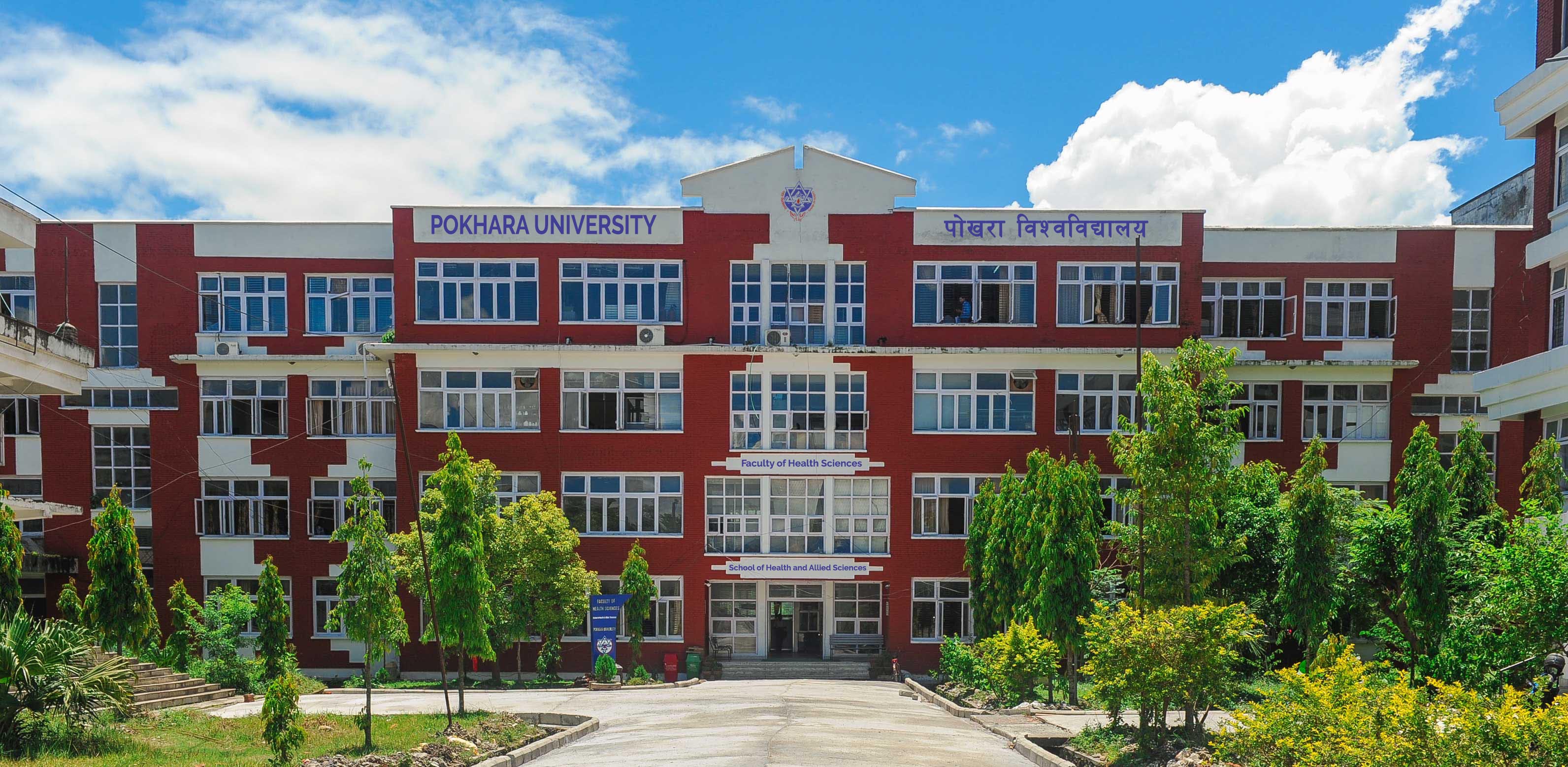
Master of Science in Medical Biochemistry (M.Sc. MB) is a three-year postgraduate medical sciences program offered by the Pokhara University School of Health and Allied Sciences under Pokhara University. The School is located at Dhungepatan, Pokhara-30, Kaski.
The program carries 98 credit hours across six semesters. Its study areas include principles of biochemistry, metabolism, endocrinology, clinical biochemistry, molecular cell biology, genetic engineering, bioinformatics, nutritional biochemistry, clinical genetics, therapeutic drug monitoring, laboratory management, research methodology, and biostatistics. Laboratory courses are concentrated in the first two years, followed by hospital-based laboratory practice and a thesis during the third year.
| Particular | Details |
|---|---|
| Course | Master of Science in Medical Biochemistry (M.Sc. MB) |
| Level | Postgraduate |
| University | Pokhara University |
| Institution | School of Health and Allied Sciences |
| Location | Dhungepatan, Pokhara-30, Kaski |
| Duration | 3 years |
| Academic Structure | 6 semesters |
| Total Credits | 98 |
| Listed Intake | 5 seats |
| Admission | MEC postgraduate entrance framework / MECEE-PG |
| Program Fee | NPR 757,830 |
| Major Components | Theory, laboratory work, hospital-based practice, research and thesis |
| Thesis | 9 credits |
The five-seat intake is subject to determination by the Medical Education Commission and may vary between admission cycles.
Medical biochemistry examines biochemical processes in the human body and their relationship with health and disease. At postgraduate level, the program moves beyond fundamental biochemistry into clinical interpretation, laboratory analysis, metabolism, biomarkers, endocrinology, molecular biology, genetics, nutrition, quality control, and research.
The first year gives students intensive subject and laboratory exposure. The second year adds systemic medical biochemistry, hospital-based laboratory postings, research methods, statistics, clinical pharmacology, toxicology, therapeutic drug monitoring, and laboratory management.
The final year has a different structure. Students complete hospital-based laboratory practices and undertake a nine-credit thesis, bringing together the clinical laboratory and research components developed during the first four semesters.
Applicants may enter M.Sc. Medical Biochemistry with a bachelor's degree in a related subject or one of the stated health-science qualifications.
The eligible academic backgrounds include:
Bachelor's degree in a related subject
B.Sc. MLT
BMLT
B.Sc. Laboratory Medicine
BDS
MBBS
Equivalent qualification
In addition to the academic requirement, candidates must participate in the entrance and recommendation process conducted under the Medical Education Commission framework.
As a postgraduate medical sciences program, admission follows the prevailing master's-level rules of the Medical Education Commission (MEC), Nepal.
The admission process involves:
Meeting the specified bachelor's degree requirement
Appearing in the applicable MEC postgraduate entrance examination
Qualifying through the MEC entrance and merit system
Receiving recommendation within the seats assigned to the program
Completing Pokhara University and SHAS admission formalities
The stated intake is five seats. Seat numbers, scholarships, fee arrangements, entrance procedures, and admission schedules remain subject to MEC decisions for the relevant academic cycle.
The curriculum totals 98 credits over six semesters. The first two semesters each carry 24 credits and combine six theory subjects with six related laboratories. The third and fourth semesters introduce hospital-based postings alongside advanced medical biochemistry subjects. The final year is centered on hospital laboratory practice and thesis work.
| Semester | Main Academic Areas | Credits |
|---|---|---|
| I | Human Anatomy and Physiology, Principles of Biochemistry, Immunology, Analytical Biochemistry and Instrumentation, Metabolism I, Enzymology, laboratories | 24 |
| II | Metabolism II, Biomarkers and Recent Advances in Clinical Biochemistry, Endocrinology, Molecular Cell Biology and Genetic Engineering, Pediatric and Geriatric Biochemistry, Automation and Quality Control, laboratories | 24 |
| III | Systemic Medical Biochemistry I, Nutritional Biochemistry, Bioinformatics, Research Methodology, Biostatistics, hospital-based laboratory postings | 16 |
| IV | Clinical Genetics and Inborn Error of Metabolism, Clinical Pharmacology, Toxicology and Therapeutic Drug Monitoring, Systemic Medical Biochemistry II, Case Studies and Data Interpretation, Laboratory Management, postings | 16 |
| V | Hospital-Based Laboratory Practices I, Thesis | 13 |
| VI | Hospital-Based Laboratory Practices II | 5 |
Semester I establishes the postgraduate scientific base through Human Anatomy and Physiology, Principles of Biochemistry, Immunology, Analytical Biochemistry and Instrumentation, Metabolism I, and Enzymology.
Each of these areas is accompanied by laboratory work. The semester therefore has 18 theory credits and six laboratory credits.
Semester II moves further into clinical and molecular subjects. Students study Metabolism II, Biomarkers and Recent Advances in Clinical Biochemistry, Endocrinology, Molecular Cell Biology and Genetic Engineering, Pediatric and Geriatric Biochemistry, and Automation and Quality Control in Clinical Biochemistry.
Six corresponding laboratory courses continue the practical sequence.
This first-year structure gives students repeated laboratory contact while developing knowledge of biochemical processes, analytical techniques, disease-related biomarkers, endocrine systems, genetic mechanisms, and clinical laboratory quality.
The third semester introduces Systemic Medical Biochemistry I and Nutritional Biochemistry alongside Bioinformatics, Research Methodology, and Biostatistics.
Two hospital-based laboratory postings are included in the same semester.
Research Methodology and Biostatistics are particularly relevant at this stage because thesis work begins in the following academic year. Bioinformatics adds a computational component to the interpretation and organization of biological information.
Semester IV extends the clinical emphasis through:
Clinical Genetics and Inborn Error of Metabolism
Clinical Pharmacology, Toxicology and Therapeutic Drug Monitoring
Systemic Medical Biochemistry II
Case Studies and Data Interpretation
Laboratory Management
Students also complete two further laboratory postings connected with systemic medical biochemistry.
This stage links biochemical knowledge with clinical cases, laboratory organization, drug monitoring, genetic and metabolic disorders, and interpretation of laboratory data.
The third year is structured around hospital laboratory experience and research rather than a large set of conventional taught subjects.
Semester V includes:
Hospital Based Laboratory Practices I – 4 credits
Thesis – 9 credits
Semester VI consists of:
Hospital Based Laboratory Practices II – 5 credits
The thesis is the largest single academic component in the curriculum. Combined with earlier Research Methodology and Biostatistics courses, it gives the program a defined research progression rather than placing research only at the end.
Hospital-based practice also continues across the final two semesters, extending the laboratory postings introduced during the second year.
Laboratory work is central to M.Sc. Medical Biochemistry.
Students complete practical courses in:
Human Anatomy and Physiology
Principles of Biochemistry
Immunology
Analytical Biochemistry and Instrumentation
Metabolism
Enzymology
Biomarkers and Clinical Biochemistry
Endocrinology
Molecular Cell Biology and Genetic Engineering
Pediatric and Geriatric Biochemistry
Automation and Quality Control
Later stages replace these subject-specific laboratories with hospital-based practice.
This progression takes students from controlled academic laboratory work into clinical laboratory contexts where biochemical analysis, quality processes, laboratory data, and clinical correlation become more prominent.
Research preparation begins before the thesis year.
The third semester includes Research Methodology and Biostatistics. Bioinformatics is studied during the same semester, while Case Studies and Data Interpretation appears in Semester IV.
Together, these subjects support work involving research design, quantitative analysis, biological information, and interpretation of clinical laboratory findings.
The nine-credit thesis in Semester V then gives students a substantial research assignment within the degree structure.
The updated fee structure for the program gives the following amount:
| Fee Component | Amount |
|---|---|
| MSc Medical Biochemistry Program Fee | NPR 757,830 |
| Security Deposit | NPR 10,000 refundable |
| FSU Fee | NPR 1,000 |
The security deposit and FSU fee are separate from the program fee.
Fees for medical education remain subject to the prevailing MEC framework. A fee attached to one admission cycle should not be treated as permanent for future intakes.
The program connects medical biochemistry with clinical laboratory work, medical education, and research. Its curriculum is relevant to biochemical investigation and interpretation within hospitals, medical colleges, health institutes, and research settings.
The broader academic direction of the Medical Laboratory Technology, Microbiology and Biochemistry department includes the preparation of clinical laboratory professionals and scientists for work connected with diagnosis, disease monitoring, treatment support, research, and medical education.
Graduates may therefore explore areas associated with:
Clinical biochemistry laboratories
Hospitals and health institutes
Medical colleges
Academic and teaching work
Laboratory-based medical research
Health research institutions
These are possible professional settings rather than guaranteed employment outcomes. Entry into specific positions depends on qualifications, professional requirements, experience, recruitment conditions, and available opportunities.
The program may suit graduates who already have a relevant laboratory, biomedical, dental, or medical background and want deeper study of biochemical mechanisms and clinical laboratory science.
Students should be prepared for substantial laboratory work. The first year includes 12 named laboratory courses, the second year introduces hospital-based postings, and the third year combines extended hospital laboratory practice with thesis research.
The curriculum also requires engagement with metabolism, molecular biology, genetics, clinical chemistry, instrumentation, quality control, statistics, bioinformatics, pharmacology, toxicology, laboratory management, and data interpretation.
The program runs for three years across six semesters.
The complete curriculum carries 98 credit hours.
The listed intake is five seats. Seat allocation is subject to MEC determination for the applicable admission cycle.
Applicants may qualify with a bachelor's degree in a related subject, B.Sc. MLT, BMLT, B.Sc. Laboratory Medicine, BDS, MBBS, or an equivalent qualification.
Admission follows the applicable postgraduate entrance and recommendation system of the Medical Education Commission, commonly handled through MECEE-PG.
The program fee is NPR 757,830. A refundable security deposit of NPR 10,000 and an FSU fee of NPR 1,000 are listed separately.
Yes. Hospital-based laboratory postings begin during the second year, followed by Hospital Based Laboratory Practices I and II during the third year.
Yes. Semester V includes a nine-credit thesis.






