Overview
BSc Medical Laboratory Technology (B.Sc. MLT) at Pokhara University
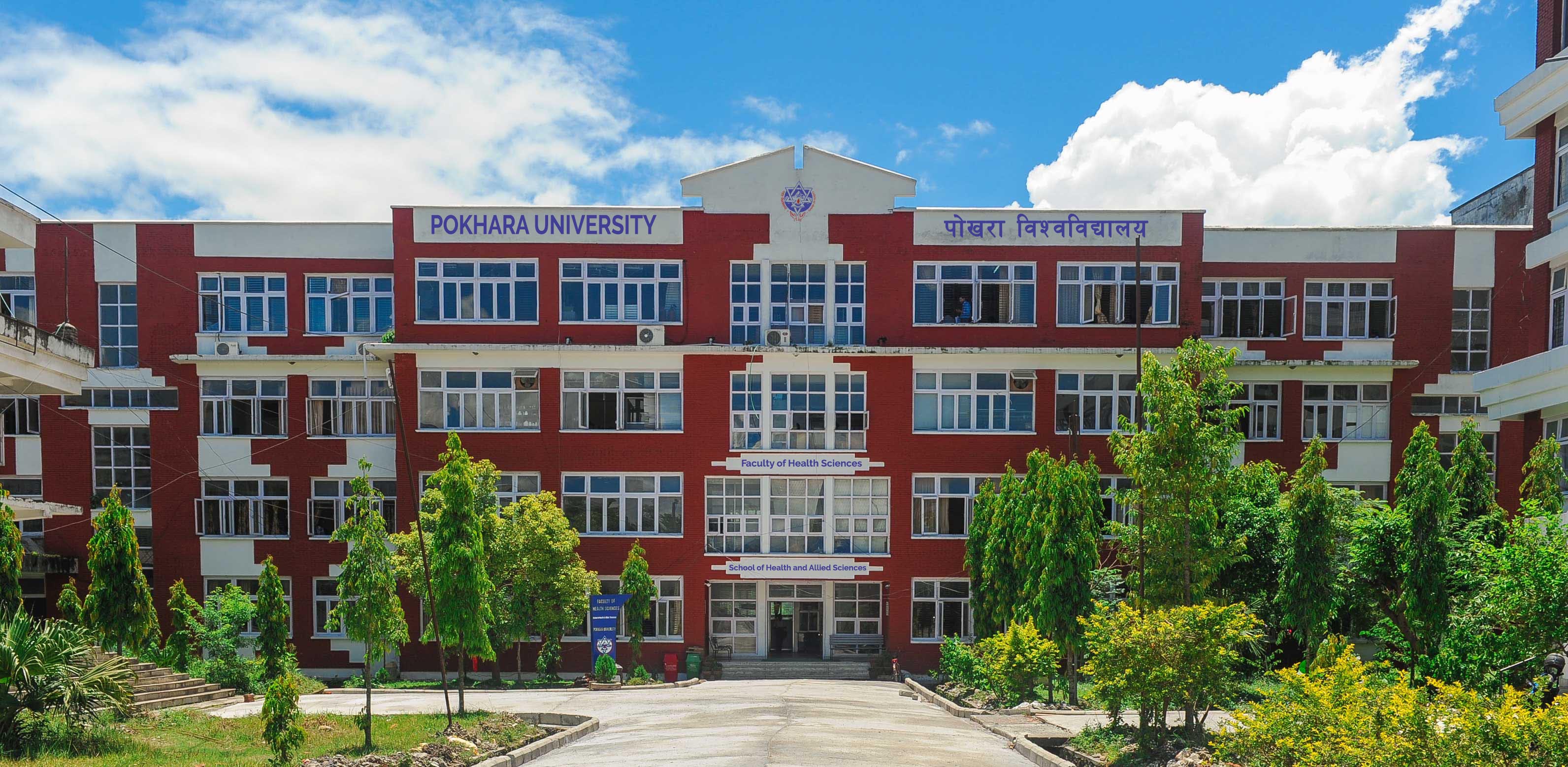
Bachelor of Science in Medical Laboratory Technology (B.Sc. MLT) is a four-year undergraduate health-science program offered by the Pokhara University School of Health and Allied Sciences under Pokhara University. The School is located at Dhungepatan, Pokhara-30, Kaski.
The program combines medical laboratory science with microbiology, biochemistry, hematology, pathology, immunology, chemistry, epidemiology, biotechnology, biostatistics, clinical pharmacology, toxicology, laboratory management, and research. Practical laboratory courses and seminars run through the curriculum, followed by clinical laboratory research, project work, and a six-month internship in the final semester. The current program intake is 20 seats, subject to Medical Education Commission seat determination for the applicable admission cycle.
BSc MLT at a Glance
| Particular | Details |
|---|---|
| Course | Bachelor of Science in Medical Laboratory Technology (B.Sc. MLT) |
| Level | Undergraduate |
| University | Pokhara University |
| Institution | School of Health and Allied Sciences |
| Location | Dhungepatan, Pokhara-30, Kaski |
| Duration | 4 years |
| Academic Structure | 8 semesters |
| Current Seat Allocation | 20 seats |
| Entrance | MECEE-BL |
| Final Semester | Six-month internship |
| Main Study Areas | Microbiology, Biochemistry, Hematology, Pathology, Immunology, Clinical Laboratory Science |
The curriculum is built around laboratory-based learning from the first semester. Students begin with the basic sciences needed to understand laboratory investigation and later move into clinical laboratory subjects, research, management, project work, and internship training.
What is BSc Medical Laboratory Technology?
Medical Laboratory Technology deals with laboratory investigations used in detecting, diagnosing, monitoring, treating, and preventing disease. Laboratory professionals work with biological samples, laboratory procedures, analytical methods, and test results that contribute to clinical decision-making.
At SHAS, B.Sc. MLT brings together the major laboratory disciplines rather than concentrating on one testing area. The curriculum covers microbiology from fundamental concepts through bacteriology, parasitology, virology, mycology, and clinical microbiology. Biochemistry progresses from fundamental biochemistry and biomolecules to clinical biochemistry, while hematology develops into immunohematology and blood banking.
Pathology, cytopathology, histopathology, immunology, molecular cell biology, applied biotechnology, pharmacology, toxicology, epidemiology, and biostatistics broaden the academic base of the program.
Eligibility for BSc MLT
Applicants must meet the academic requirement for the Common Entrance Examination of Bachelor Level in Health Professional Education conducted by the Medical Education Commission.
The eligibility routes include:
-
10+2 Science with Physics, Chemistry, and Biology, with at least 50% aggregate marks or GPA 2.4 or equivalent; or
-
An equivalent percentage under another certificate-level grading system, such as A-Level; or
-
Diploma in Medical Laboratory Science with at least 50%, together with registration in the Health Professional Council.
Candidates must pass the bachelor-level common entrance examination conducted by the Medical Education Commission and be successful and recommended through the applicable admission system.
MECEE-BL Admission Process
Admission to B.Sc. MLT is governed by the bachelor-level health-professional education system of the Medical Education Commission (MEC).
Applicants who meet the required academic qualifications must appear for MECEE-BL. Selection follows the MEC entrance and merit system within the number of seats determined for the program.
The admission process therefore involves:
-
Meeting the specified academic eligibility
-
Appearing for MECEE-BL
-
Qualifying under the MEC entrance system
-
Selection according to merit and available seats
-
Completing the required admission formalities at the School
The stated intake of 20 seats is tied to MEC seat determination. Seat numbers, scholarship provisions, fees, admission procedures, and related arrangements can change between academic cycles according to MEC decisions and the applicable admission calendar.
Four-Year Curriculum Structure
B.Sc. MLT follows eight semesters. The first six semesters combine theory with laboratory courses and seminars. The seventh semester moves toward clinical laboratory research, management, project work, and seminar activity, while the eighth semester is devoted to a six-month internship.
| Semester | Major Academic Areas | Credits |
|---|---|---|
| I | Medical Laboratory Science, Microbiology, Biochemistry, Anatomy and Physiology, General and Analytical Chemistry, laboratories | 20 |
| II | Bacteriology, Biochemistry, Anatomy and Physiology, General Pathology, Parasitology, laboratories, Seminar | 20 |
| III | Bacteriology II, Biochemistry, Hematology, Epidemiology, Immunology, laboratories, Seminar | 20 |
| IV | Virology, Clinical Biochemistry, Hematology, Cytopathology, Histopathology, laboratories, Seminar | 20 |
| V | Mycology, Clinical Biochemistry, Immunohematology and Blood Bank, Molecular Cell Biology and Applied Biotechnology, Biostatistics, laboratories, Seminar | 19 |
| VI | Clinical Microbiology, Clinical Biochemistry, Clinical Pharmacology and Toxicology, Forensic and Medical Jurisprudence, laboratories, Seminar | 16 |
| VII | Clinical Laboratory Research, Laboratory Management, Project Work, Seminar | 13 |
| VIII | Six-month Internship | 6 |
First Year: Building the Scientific Base
The first year gives students the scientific background required for later clinical laboratory subjects.
Semester I includes Medical Laboratory Science, Fundamentals of Microbiology, Fundamental Biochemistry, Anatomy and Physiology I, General Chemistry, and Analytical Chemistry. Laboratory courses in microbiology, biochemistry, and analytical chemistry begin at the same stage.
Semester II moves into Bacteriology I, Biomolecules and Metabolism I, Anatomy and Physiology II, General Pathology, and Parasitology. Practical courses accompany bacteriology, biochemistry, parasitology, anatomy, and physiology. Students also complete their first seminar.
This structure means laboratory practice starts alongside the introductory sciences rather than being postponed until the later years.
Second Year: Clinical Laboratory Disciplines
During the second year, the curriculum becomes more closely tied to the main branches of laboratory medicine.
Semester III covers Bacteriology II, further biochemistry, Hematology I, Epidemiology, and Immunology. Separate laboratories support microbiology, biochemistry, hematology, and immunology, followed by another seminar.
Semester IV includes Virology, Clinical Biochemistry, Hematology II, Cytopathology, and Histopathology. Laboratory work is included for each of these areas.
By the end of the second year, students have worked across microbiology, biochemical testing, blood sciences, immune processes, cellular pathology, and tissue pathology.
Third Year: Advanced Laboratory Study
The fifth semester introduces Mycology, further Clinical Biochemistry, Hematology III with Immunohematology and Blood Bank, Molecular Cell Biology and Applied Biotechnology, and Biostatistics.
Laboratory courses continue in microbiology, biochemistry, and hematology, together with a seminar.
Semester VI develops Clinical Microbiology and Clinical Biochemistry further and adds Clinical Pharmacology and Toxicology, along with Forensic and Medical Jurisprudence. Laboratory work in microbiology, biochemistry, and toxicology continues during this stage.
The third year therefore brings laboratory science together with clinical interpretation, blood banking, biotechnology, statistical work, toxicology, and medico-legal study.
Fourth Year: Research, Management, and Internship
The seventh semester changes the academic pattern. Instead of carrying a large group of separate laboratory disciplines, students focus on:
-
Clinical Laboratory Research
-
Laboratory Management
-
Project Work
-
Seminar
Project Work carries six credits, giving students a defined research and academic assignment before the final internship.
Semester VIII consists of a six-month internship worth six credits. This places the internship after completion of the main scientific, laboratory, research, and management coursework.
Laboratory and Practical Learning at SHAS
Practical laboratory work is a recurring part of B.Sc. MLT. The curriculum contains laboratory courses from the first semester through the sixth semester, covering microbiology, biochemistry, chemistry, anatomy and physiology, hematology, immunology, cytopathology, histopathology, and toxicology.
The School's wider academic environment also includes laboratory facilities, seminars, research activities, field exposure, and practical learning. This institutional setting is relevant to a program in which laboratory procedures form a substantial part of the curriculum.
Pokhara University's central library within the academic complex provides textbooks, reference materials, computers, electronic resources, and high-speed internet that can support coursework, seminar preparation, project work, and research.
Core Areas Students Encounter
The course brings several laboratory disciplines together across four years.
Students work with subjects such as:
-
Medical Laboratory Science
-
Bacteriology
-
Parasitology
-
Virology
-
Mycology
-
Clinical Microbiology
-
Fundamental and Clinical Biochemistry
-
Hematology
-
Immunohematology and Blood Bank
-
Immunology
-
General Pathology
-
Cytopathology
-
Histopathology
-
Molecular Cell Biology
-
Applied Biotechnology
-
Epidemiology
-
Biostatistics
-
Clinical Pharmacology
-
Toxicology
-
Clinical Laboratory Research
-
Laboratory Management
Because these subjects appear at different stages, students move from foundational science toward increasingly specialized laboratory work.
Skills Developed Through BSc MLT
The curriculum supports the development of skills connected directly with laboratory education. These include working with microbiological, biochemical, hematological, immunological, and pathological laboratory procedures; understanding laboratory investigation in relation to disease; participating in seminars; handling research-oriented academic work; and studying laboratory management.
Project work introduces a more independent research component in the seventh semester, while the six-month internship provides practical exposure after the main academic coursework.
The program also introduces epidemiology and biostatistics, giving students a quantitative and population-health component alongside laboratory sciences.
Career Areas After BSc MLT
Career opportunities associated with the program cover laboratory, health-service, academic, research, and related institutional settings.
Graduates may consider areas such as:
-
Universities in academic and research roles
-
General hospitals and clinics
-
Medical colleges and teaching hospitals
-
Health centers
-
Research institutions
-
Governmental and non-governmental health organizations
-
Pharmaceutical industry settings
-
Food industries
Career entry depends on professional registration and licensing requirements, available positions, individual competence, experience, and the rules applying to the relevant organization. The degree itself does not guarantee employment in a particular sector.
Professional Council and Licensing
Medical Laboratory Technology is connected with the Nepal Health Professional Council (NHPC).
The Diploma in Medical Laboratory Science admission route already requires Health Professional Council registration for candidates entering B.Sc. MLT through that qualification.
After completing the degree, graduates entering regulated professional practice must meet the applicable professional council licensing requirements. Academic graduation and professional licensing are separate stages, and the council rules in force at the time of professional entry apply.
Who May Consider BSc MLT?
B.Sc. MLT may suit students whose interests are centered on laboratory science and its role in health care rather than direct bedside clinical care.
The curriculum requires sustained study of chemistry, biology, microbiology, biochemistry, pathology, blood sciences, laboratory procedures, research, and analytical work. Students also spend significant time in practical laboratory courses before moving into project work and internship.
The course is therefore particularly relevant to students comfortable with detailed scientific work, laboratory procedures, biological samples, observation, measurement, record-based work, and research-oriented study.
FAQ
How long is BSc MLT at Pokhara University?
B.Sc. MLT is a four-year undergraduate program organized across eight semesters.
How many seats are available for BSc MLT at SHAS?
The current listed intake is 20 seats. Seat allocations are subject to determination by the Medical Education Commission for each admission cycle.
Which entrance examination is required for BSc MLT?
Applicants must pass the Common Entrance Examination of Bachelor Level in Health Professional Education conducted by MEC, commonly handled through the MECEE-BL system.
What is the minimum academic eligibility?
Applicants may qualify through 10+2 Science with Physics, Chemistry, and Biology and at least 50% aggregate marks or GPA 2.4 or equivalent. Equivalent certificate-level qualifications and the specified Diploma in Medical Laboratory Science route are also included.
Can Diploma in Medical Laboratory Science students apply?
Yes. Applicants with a Diploma in Medical Laboratory Science with at least 50% may apply through the stated route and must be registered with the Health Professional Council.
Does BSc MLT include practical laboratory classes?
Yes. Laboratory courses run through the first six semesters across microbiology, biochemistry, hematology, immunology, pathology, toxicology, and related areas.
Does the program include research work?
Yes. The seventh semester includes Clinical Laboratory Research and a six-credit Project Work course.
Is there an internship in BSc MLT?
Yes. The eighth semester consists of a six-month internship.