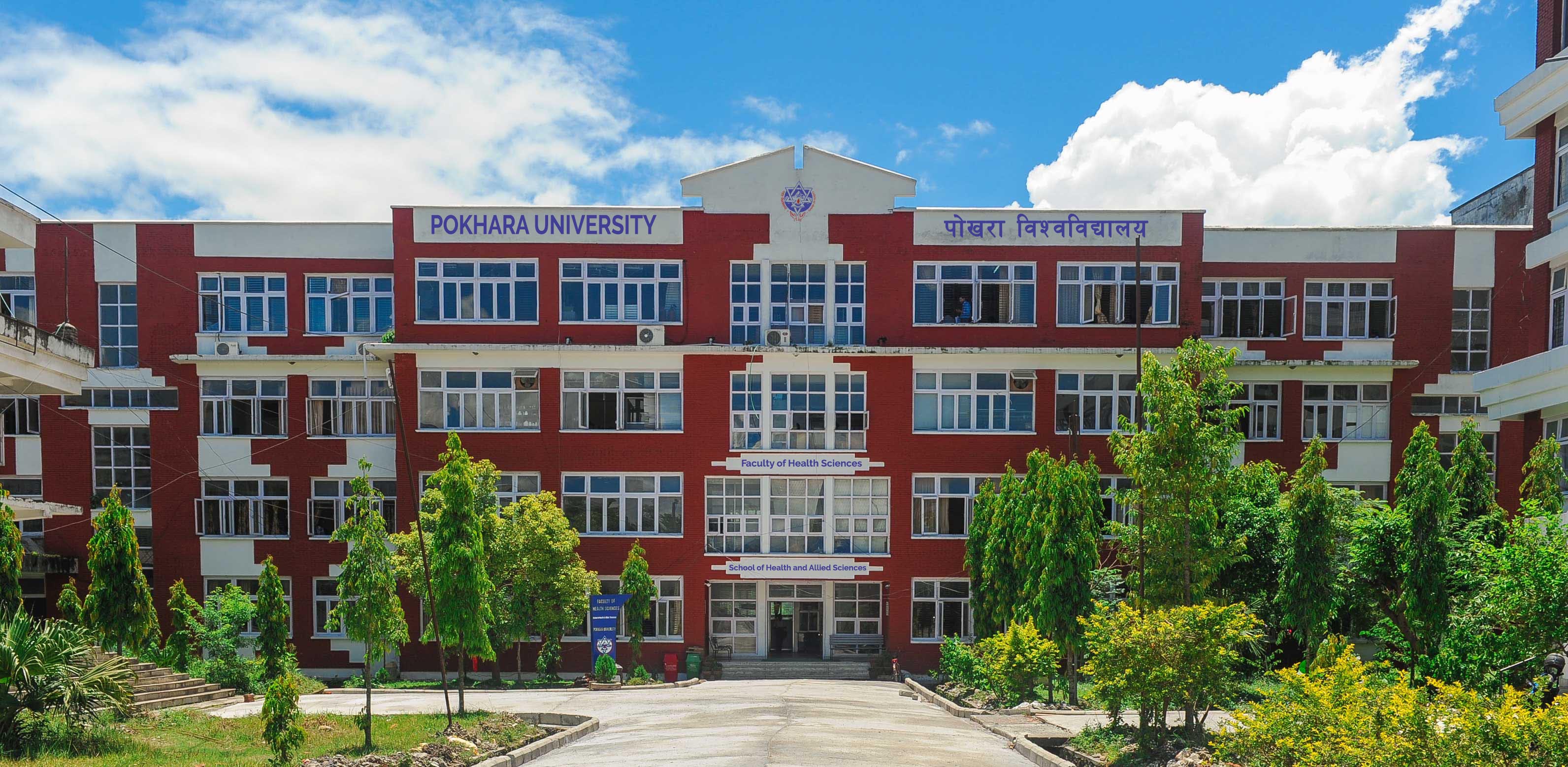
Bachelor of Pharmacy (B.Pharm), presented in the academic curriculum as Bachelor of Pharmaceutical Sciences, is a four-year undergraduate program offered by the Pokhara University School of Health and Allied Sciences under Pokhara University. The School is located at Dhungepatan, Pokhara-30, Kaski.
The program has eight semesters with a total of 159 credit hours. Its curriculum covers pharmaceutics, pharmaceutical chemistry, pharmacology, pharmacognosy, pharmaceutical microbiology, biopharmaceutics, industrial pharmacy, hospital and community pharmacy, quality assurance, clinical pharmacy, pharmacotherapeutics, pharmacy practice, pharmaceutical jurisprudence, research methodology, and project work.
Practical education is integrated through pharmaceutical laboratories and seminars across the program. The current intake is 40 seats, subject to Medical Education Commission determination for the applicable admission cycle.
| Particular | Details |
|---|---|
| Course | Bachelor of Pharmacy / Bachelor of Pharmaceutical Sciences (B.Pharm) |
| Level | Undergraduate |
| University | Pokhara University |
| Institution | School of Health and Allied Sciences |
| Location | Dhungepatan, Pokhara-30, Kaski |
| Duration | 4 years |
| Academic Structure | 8 semesters |
| Total Credits | 159 |
| Current Seat Allocation | 40 seats |
| Entrance | MECEE-BL |
| Program Fee | NPR 777,000 |
| Professional Council | Nepal Pharmacy Council |
| Final Academic Component | Pharmacy Practice, Pharmaceutical Jurisprudence, Research Project Work |
Pharmaceutical sciences have been part of Pokhara University's health-science education since 2001, when the Bachelor of Pharmaceutical Sciences program began under the then School of Pharmaceutical Sciences. Pharmacy therefore forms one of the longest-running academic areas within the institutional development that later became SHAS.
B.Pharm combines biological sciences, chemistry, pharmaceutical formulation, medicines, natural products, pharmacology, manufacturing, quality control, clinical pharmacy, and pharmacy practice.
The first year establishes the scientific base through Fundamentals of Pharmacy, Anatomy and Physiology, General Chemistry, Stereochemistry and Reaction Mechanism, Medicinal and Aromatic Plants, Mathematics, Biochemistry, Molecular Cell Biology, Physical Chemistry, Biostatistics, and Computer Application.
From the second year, students move further into dosage forms and formulations, pathophysiology, pharmaceutical microbiology, immunology, natural products chemistry, pharmacology, analytical chemistry, spectroscopy, and biopharmaceutics.
The later curriculum introduces pharmaceutical engineering, medicinal chemistry, industrial pharmacy, hospital and community pharmacy, quality assurance, toxicology, pharmaceutical management, clinical pharmacy, social and public health pharmacy, pharmacotherapeutics, traditional systems of medicine, research methodology, pharmacy practice, and pharmaceutical jurisprudence.
The pharmaceutical sciences program is intended to develop theoretical knowledge and practical skills relevant to pharmacy practice and pharmaceutical science.
Its stated academic direction includes:
Preparing students for work connected with the pharmacy profession
Developing knowledge and practical skills in pharmaceutics
Building understanding of pharmaceutical care practice
Supporting study related to natural medicines
Strengthening pharmacy practice through education and training
Connecting pharmaceutical education with research and publication
The curriculum reflects these objectives through its combination of pharmaceutical science subjects, practical laboratories, clinical and community pharmacy, research methodology, and final project work.
Applicants must qualify for the Common Entrance Examination of Bachelor Level in Health Professional Education conducted by the Medical Education Commission.
The stated academic routes include:
10+2 Science with Physics, Chemistry, and Biology and at least 50% aggregate marks or GPA 2.4 or equivalent; or
An equivalent percentage under another certificate-level grading system, such as A-Level; or
Diploma in Pharmacy with at least 50%, along with registration in the Nepal Pharmacy Council.
Candidates must pass the MEC bachelor-level entrance examination and be successful and recommended through the applicable admission system.
Admission to B.Pharm falls under the bachelor-level health-professional education framework of the Medical Education Commission (MEC), Nepal.
The admission process involves:
Meeting the prescribed academic eligibility
Appearing for MECEE-BL
Qualifying in the national entrance examination
Merit-based selection within the allocated seats
Completing Pokhara University and School admission requirements
The current B.Pharm allocation is 40 seats. MEC rules govern seat determination, scholarship provisions, fee arrangements, merit, and admission procedures for each intake.
Seats may therefore differ between admission cycles. Applicants should use the MEC calendar and admission provisions issued for the year in which they apply.
The four-year curriculum totals 159 credit hours. Laboratory courses begin in the first semester and continue through the seventh semester, while pharmaceutical seminars run from Semester II through Semester VII. Semester VIII concentrates on pharmacy practice, jurisprudence, and research project work.
| Semester | Main Academic Areas | Credits |
|---|---|---|
| I | Fundamentals of Pharmacy, Anatomy and Physiology, Pharmaceutical Chemistry, Pharmacognosy, Mathematics, laboratories | 19 |
| II | Physical Pharmacy, Biochemistry, Anatomy and Physiology, Molecular Cell Biology, Physical Chemistry, Biostatistics and Computer Application, laboratories, seminar | 21 |
| III | Dosage Forms and Formulations, Pathophysiology, Pharmaceutical Microbiology, Immunology, Pharmaceutical Chemistry, Natural Products Chemistry, laboratories, seminar | 21 |
| IV | Dosage Forms, Biopharmaceutics, Pharmacology, Analytical Chemistry, Natural Products Chemistry, Spectroscopy, laboratories, seminar | 22 |
| V | Pharmaceutical Engineering, Biopharmaceutics, Pharmacology, Medicinal Chemistry, Pharmaceutical Chemistry, Himalayan Crude Drugs, laboratories, seminar | 21 |
| VI | Industrial Pharmacy, Hospital and Community Pharmacy, Quality Assurance, Toxicology, Medicinal Chemistry, Pharmaceutical Management, laboratories, seminar | 22 |
| VII | Cosmetology, Clinical Pharmacy, Social and Public Health Pharmacy, Pharmacotherapeutics, Traditional Systems of Medicine, Research Methodology, laboratories, seminar | 21 |
| VIII | Pharmacy Practice, Pharmaceutical Jurisprudence, Research Project Work | 12 |
Semester I introduces Pharmaceutics I through Fundamentals of Pharmacy. Students also study Anatomy and Physiology I, pharmaceutical chemistry, medicinal and aromatic plants, and mathematics.
Three pharmaceutical laboratories accompany these courses: Fundamentals of Pharmacy, General Chemistry, and Medicinal and Aromatic Plants.
Semester II develops the scientific base through Physical Pharmacy, Biochemistry, Anatomy and Physiology II, Molecular Cell Biology with Genetic Engineering, Physical Chemistry, and Biostatistics and Computer Application.
Practical work includes laboratories in Physical Pharmacy, Physiology and Biochemistry, and Pharmaceutical Analysis. Pharmaceutical Seminar 1 is also introduced.
Semester III moves into Dosage Forms and Formulations A, Pathophysiology, Pharmaceutical Microbiology, Immunology, General Chemical Reaction, and Natural Products Chemistry I.
Students complete laboratories in dosage forms, pharmaceutical microbiology, and natural products chemistry, along with Pharmaceutical Seminar 2.
Semester IV continues with Dosage Forms and Formulations B and introduces Biopharmaceutics A and Pharmacology I. Analytical Chemistry, Natural Products Chemistry II, and Spectroscopy expand the chemistry and natural-product components of the degree.
These semesters connect formulation science with microbiology, immunology, pharmacology, analysis, and natural medicines.
Semester V includes Pharmaceutical Engineering and Drawing, Biopharmaceutics B, Pharmacology II, Medicinal Chemistry I focusing on natural drugs, Pharmaceutical Chemistry VI, and Himalayan Crude Drugs.
Laboratory courses cover pharmaceutical engineering, biopharmaceutics, and pharmacology.
This stage develops the relationship between medicine formulation, drug properties, biological effects, natural drug sources, and pharmaceutical production processes.
Semester VI brings several practice-oriented pharmaceutical areas together.
Students study:
Industrial Pharmacy
Hospital and Community Pharmacy
Quality Assurance
Pharmacology III: Toxicology
Medicinal Chemistry II: Synthetic Drugs
Pharmaceutical Management and Entrepreneurship
Laboratory work covers Industrial Pharmacy, Quality Assurance, and Medicinal Chemistry.
This semester gives students academic exposure to pharmaceutical production and quality systems alongside hospital, community, toxicology, chemistry, and management subjects.
Semester VII includes Clinical Pharmacy and Pharmacotherapeutics together with Social and Public Health Pharmacy.
Students also study Cosmetology, Traditional Systems of Medicine, and Research Methodology.
Practical work includes laboratories in Cosmetology, Hospital and Clinical Pharmacy, and Traditional Systems of Medicine. Pharmaceutical Seminar 6 completes the sequence of seminars running through the middle and later years.
Research Methodology prepares students for the larger project component in the final semester.
Semester VIII has three courses:
Pharmacy Practice – 3 credits
Pharmaceutical Jurisprudence – 3 credits
Research Project Work – 6 credits
Research Project Work carries half of the semester's 12 credits.
The final semester therefore moves away from the larger subject-and-laboratory pattern of the earlier years and concentrates on professional pharmacy practice, legal and regulatory study, and a defined research project.
The updated MEC fee listed for B.Pharmacy is NPR 777,000.
| Fee Component | Amount |
|---|---|
| B.Pharmacy Program Fee | NPR 777,000 |
| Security Deposit | NPR 10,000 refundable |
| FSU Fee | NPR 1,000 |
The security deposit and FSU fee are listed separately from the program fee.
Fee arrangements remain subject to the prevailing MEC framework and Pokhara University requirements applicable to the admission cycle.
Laboratory work runs through most of the B.Pharm curriculum.
The program includes practical study in areas such as:
Pharmacy fundamentals
Pharmaceutical chemistry and analysis
Medicinal and aromatic plants
Physical pharmacy
Physiology and biochemistry
Dosage forms and formulations
Pharmaceutical microbiology
Natural products chemistry
Spectral analysis
Pharmaceutical engineering
Biopharmaceutics
Pharmacology
Industrial pharmacy
Quality assurance
Medicinal chemistry
Cosmetology
Hospital and clinical pharmacy
Traditional systems of medicine
This laboratory sequence is supplemented by six pharmaceutical seminars and final research project work.
The pharmacy program identifies several sectors in which graduates may explore professional opportunities:
Pharmaceutical industries
Hospitals
Academic institutions
Drug dispensing establishments
Government drug administration
Drug research laboratories
Health research institutes
Natural medicine research institutes
NGOs and INGOs
These are possible professional settings rather than guaranteed employment outcomes. Entry depends on licensing requirements, vacancies, individual competence, experience, recruitment conditions, and the requirements of the organization concerned.
Completion of the B.Pharm degree and entry into pharmacy practice are separate stages.
Graduates must meet the licensing requirements of the Nepal Pharmacy Council, including the applicable licensing examination, before entering the regulated pharmacy profession.
Students approaching graduation need to follow the council rules and licensing procedures in force at that time.
B.Pharm graduates may continue into postgraduate pharmaceutical education. SHAS offers Master of Pharmacy (M.Pharm) studies in areas including Natural Products Chemistry, Pharmaceutics, and Clinical Pharmacy.
For M.Pharm admission, candidates must hold a B.Pharm degree or equivalent and be registered with the respective professional council of their country.
Bachelor of Pharmacy is a four-year undergraduate program organized across eight semesters.
The curriculum carries a total of 159 credit hours.
The current allocation is 40 seats. Seat numbers are subject to MEC determination for each admission cycle.
Applicants must pass the Common Entrance Examination of Bachelor Level in Health Professional Education conducted through MEC, commonly referred to as MECEE-BL.
Yes. Diploma in Pharmacy graduates with at least 50% may apply through the stated eligibility route and must be registered with the Nepal Pharmacy Council.
The listed program fee is NPR 777,000. A refundable security deposit of NPR 10,000 and FSU fee of NPR 1,000 are listed separately.
Yes. Pharmaceutical laboratories run from Semester I through Semester VII in areas including pharmaceutics, chemistry, pharmacology, microbiology, natural products, quality assurance, and clinical pharmacy.
Yes. Semester VII includes Research Methodology, followed by six-credit Research Project Work in Semester VIII.