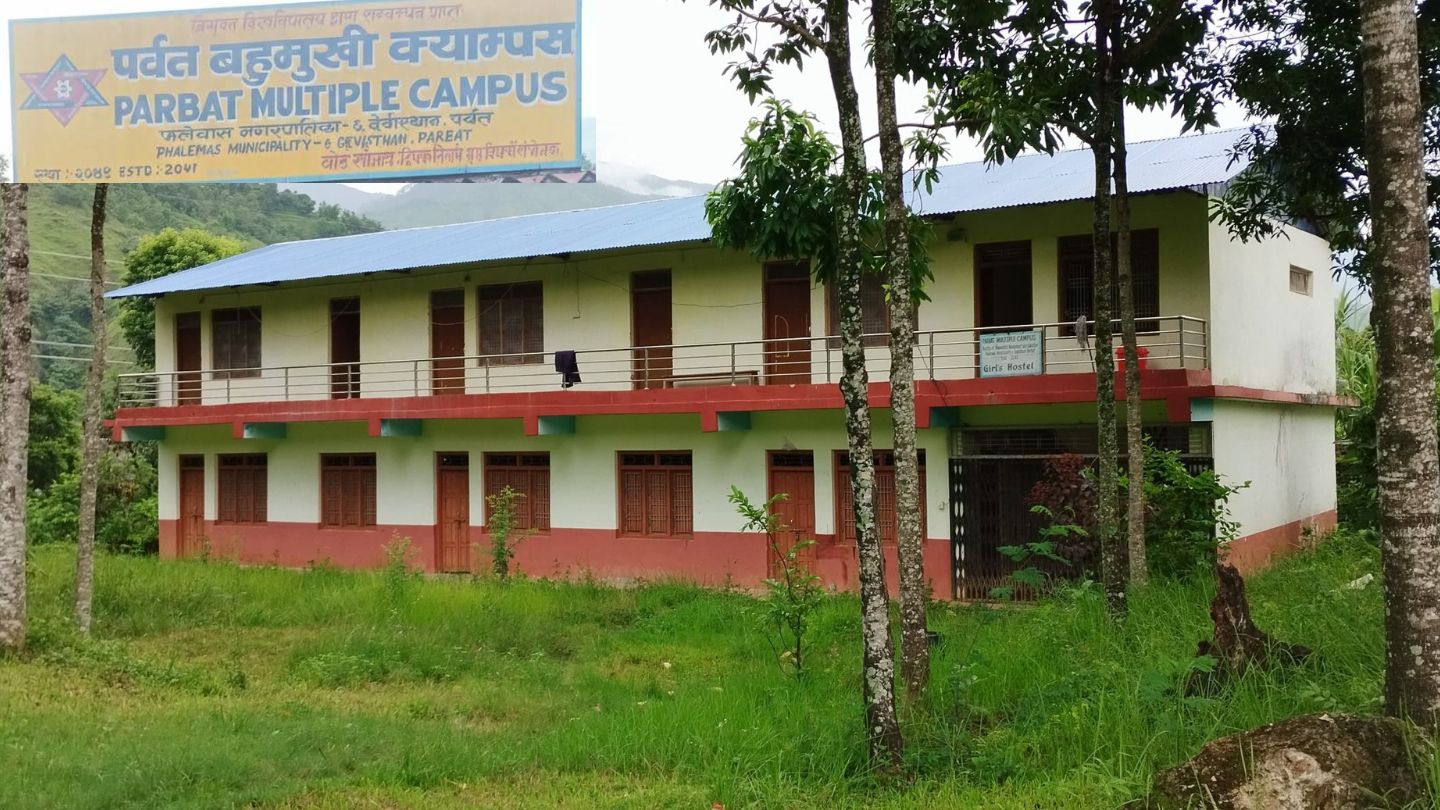
The Bachelor of Education (B.Ed.) at Parbat Multiple Campus is a four-year bachelor-level program under the annual system of Tribhuvan University. It is offered through the Faculty of Education at the campus in Phalebas Municipality–6, Devisthan, Parbat.
The Faculty of Education was added to the campus in 2064 BS, extending the institution’s role from management and humanities into teacher education. At present, the program is run with Nepali and English as major subjects and Economics as a minor subject. The course carries a total of 2,200 full marks.
Four-year B.Ed. program under Tribhuvan University
Annual examination system
Total study load of 2,200 full marks
Offered through the Faculty of Education
Nepali and English available as major subjects
Economics available as a minor subject
Includes teaching practicum in the final year
Library, computer lab, internet, free Wi-Fi, and hostel support available
Scholarships and fee concessions are available
Full discount support is available for girl students and poor students
The B.Ed. program is designed as both an academic and professional teacher education program. It combines communication courses, professional core courses, specialization study, and teaching practicum.
Total courses: 22
Total marks: 2,200
Group A: Communication Skills – 2 courses, 200 marks
Group B: Professional Core Areas – 4 courses, 400 marks
Group C: Specialization Major – 10 courses, 1,000 marks
Group D: Specialization Minor – 5 courses, 500 marks
Group E: Teaching Internship/Practicum – 1 course, 100 marks
Major subjects currently taught at the campus: Nepali and English
Minor subject currently taught at the campus: Economics
Core study areas include Education, Psychology, Curriculum and Evaluation, and Classroom Teaching
Prepare competent teachers for secondary-level teaching
Produce trained teachers, educational planners, and administrative assistants
Combine subject study with professional teacher education
Build teaching ability through coursework and practicum
The B.Ed. program is structured for students who want to enter school education and related educational roles through a formal university pathway. It supports study in two subject areas through major and minor specialization, while also covering the professional side of teaching through psychology, curriculum, evaluation, and classroom teaching.
At Parbat Multiple Campus, the program is tied closely to the campus’s community role. It gives local students access to teacher education within Parbat and nearby areas, supported by hostel facilities, library use, and campus-based academic guidance.
Understand educational foundations and educational psychology
Develop knowledge of curriculum and evaluation
Complete specialization study in a major subject and a minor subject
Carry out teaching practicum as part of the degree
Build readiness for teaching and other education-related roles
Classroom teaching
Student assessment
Curriculum planning
Educational psychology
Subject teaching in Nepali or English
Minor-subject study in Economics
Teaching practicum and school-based experience
The B.Ed. program is supported by regular teaching, regular evaluation, and faculty involvement in student guidance. The campus also links teaching with counseling, monitoring, and extracurricular participation.
Regular classroom teaching
Regular student assessment and evaluation
Teaching practicum in the final year
Counseling and student monitoring
Participation in extracurricular activities
Study support through library, computer lab, internet, and free Wi-Fi
School teaching
Educational planning
Administrative support roles in the education sector
Further study in education
Various scholarships are available
Fee concessions are available for eligible students
Full discount support is available for girl students and poor students
Admission opens after the campus publishes its notice
Applicants submit the prescribed form with required academic documents
Applicants must have passed Grade 12, HSE, PCL, or an equivalent qualification
For Nepali major, applicants need Nepali major with at least 200 marks
For English major, applicants need English or Linguistics major, or 50 percent marks in General English, or 50 percent in the entrance examination conducted by the concerned campus department
Minor subject study must be different from the selected major subject
Admission is completed after document submission and fee payment under TU rules
Class 12 / +2 or equivalent academic transcript
Character certificate
Migration certificate, if applicable
Transfer certificate
Citizenship certificate or birth certificate copy
Passport-size photographs
Entrance scorecard, if required
Completed admission form
Admission fee payment receipt
Equivalence certificate, if applicable
The B.Ed. program follows the annual system of Tribhuvan University. Final examinations are conducted through the Office of the Controller of Examinations. Academic registration, examinations, and results follow TU rules, guidelines, and the applicable academic calendar. The final year includes teaching internship/practicum as part of the degree structure.
The B.Ed. program at Parbat Multiple Campus connects teacher education with the campus’s long-standing community role in higher education. With Nepali and English as major subjects, Economics as a minor subject, and a full four-year annual structure under TU, the program offers a clear route into teacher education for students studying in Parbat and nearby areas. Facilities such as the library, computer lab, internet access, free Wi-Fi, hostel support, and scholarship provisions add practical support to the course.
The program runs for four academic years under the annual system.
Nepali and English are available as major subjects, and Economics is available as a minor subject.
The program carries a total of 2,200 full marks.
Yes. Teaching internship/practicum is included in the final year.
Students have access to the library, computer lab, internet, free Wi-Fi, and hostel support.
Yes. The campus provides scholarships, fee concessions, and full discount support for girl students and poor students.