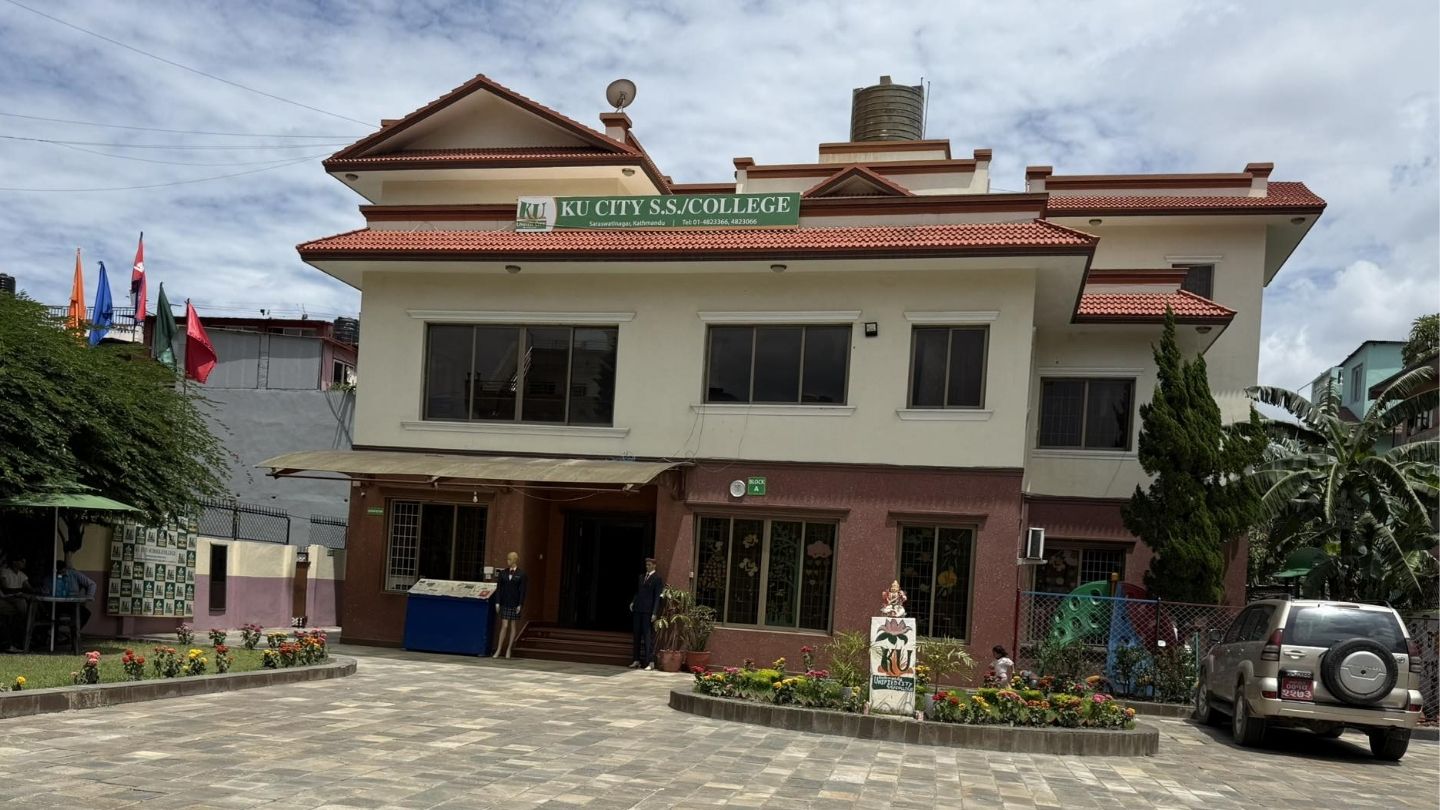
Bachelor of Social Work (BSW) at KU City College, Saraswatinagar, Chabahil, is an undergraduate social science program run under Tribhuvan University’s Faculty of Humanities and Social Sciences (FOHSS). Tribhuvan University defines social work as a four-year academic pathway within the BA framework that combines classroom learning with structured field practice.
The college lies in an urban neighbourhood where migration, unemployment, health issues, and changing family structures are visible in daily life. For you as a learner, this setting turns social work into something concrete rather than abstract. The BSW course helps students understand how social problems appear in households, communities, and institutions, and how professional social workers respond through planned interventions, documentation, and advocacy.
KU City College already runs NEB +2 programs and TU undergraduate programs, including BBS and BCA, and is located in Saraswatinagar, Chabahil, with academic and support facilities such as library, laboratories, IT services, seminar spaces, and student support services. This institutional base supports BSW students who need both theory classes and community-linked activities.
Four-year, eight-semester BSW program under Tribhuvan University, FOHSS
Focus on Nepali social issues such as poverty, exclusion, migration, gender inequality, and mental health
Combination of classroom learning, supervised fieldwork, and project work as prescribed by TU’s BSW framework
Urban campus environment in Chabahil with access to NGOs, community groups, hospitals, and local government bodies
Library, IT support, seminar halls, and counselling-oriented activities that support social work students’ learning needs
Tribhuvan University states that Bachelor of Arts in Social Work is a four-year BA program under FOHSS. The BSW curriculum builds across eight semesters, starting from foundations and moving toward advanced practice and research.
You study core social work subjects along with supporting courses from sociology, psychology, and other social sciences. Typical subject areas under TU’s BSW structure include:
Introduction to Social Work and history of the profession
Basic Sociology and Nepalese society
Basic Psychology relevant to behaviour and mental health
Social Case Work and Social Group Work
Community Organisation and community development
Social Policy, social welfare administration, and human rights
Social problems in Nepal and intervention approaches
Social work theories, ideologies, and ethics
Social work research, academic writing, and report writing
Alongside these, TU’s BA framework includes courses such as English, Nepali, Nepal Studies, and other humanities subjects that strengthen your reading, writing, and analytical skills.
Each academic year includes fieldwork requirements where you work with agencies such as NGOs, CBOs, local governments, or schools under supervision. These placements are integral parts of the syllabus rather than optional add-ons.
The BSW program at KU City College, under the TU framework, has objectives such as:
Build generalist social workers who understand Nepali social structures, institutions, and current issues
Develop knowledge of social work principles, methods, and ethics for practice with individuals, families, groups, and communities
Strengthen commitment to human rights, social justice, gender equality, and inclusion in the Nepali context
Train students to study social problems systematically and propose realistic interventions and services
Prepare graduates for entry-level practice in NGOs, INGOs, government programs, and community-based initiatives, as well as for further study in social work and related fields
Social work in Nepal connects directly with development work, public service, and community-based projects. BSW graduates commonly work in:
Non-governmental and community-based organisations
INGOs and development projects focusing on health, education, livelihoods, child protection, and disaster response
Local governments and social protection programs
Schools, colleges, and youth programmes
Hospitals, rehabilitation centres, and counselling-oriented services
Research organisations and survey projects
Many students continue toward Master of Social Work (MSW), MA in Sociology, Psychology, Gender Studies, or related disciplines for advanced roles in policy, research, or specialised practice.
After completing BSW at KU City College under TU, students are expected to be able to:
Explain key social work concepts, values, and methods in a Nepali and global context
Analyse social problems by linking individual difficulties with wider structural factors
Plan and carry out basic interventions with individuals, groups, and communities
Conduct small-scale social research, including problem identification, data collection, and report writing
Maintain case records, field reports, and project documents in a clear, professional format
Communicate with diverse groups, including children, adolescents, women’s groups, marginalised communities, and local authorities
Work ethically, respecting confidentiality, informed consent, and non-discrimination
BSW students at KU City College do not only study theories from textbooks. Fieldwork, lab activities, and community exposure are central parts of the learning process, in line with TU’s BSW requirements.
Across the eight semesters, you typically engage in:
Orientation visits to social service agencies in Kathmandu
Weekly or block fieldwork under supervision of social work faculty and agency supervisors
Group projects in communities, schools, or health posts
Awareness campaigns on topics such as gender-based violence, sanitation, mental health, or child rights
Reflective journals, field conferences, and presentations to connect practice with theory
Through these modules, students gradually build skills in communication, empathy, documentation, teamwork, leadership, and conflict handling, which are essential for social work practice.
KU City College follows student-centred teaching methods across its programs, combining theoretical classes with participatory learning activities. In BSW, this typically includes:
Interactive lectures supported by board work, slides, and handouts
Class discussions on real social issues from Kathmandu and other regions
Case studies, simulations, and role plays to practise interviewing and counselling skills
Group assignments, peer learning, and classroom presentations
Use of library resources, journals, and online materials for literature review
Seminars and guest sessions with practitioners from NGOs, UN agencies, and government programmes
IT facilities, a stocked library, seminar halls, and multipurpose spaces at KU City College help teachers run these activities in a structured way.
BSW at KU City College follows the eligibility rules of Tribhuvan University, FOHSS. TU’s BA/BSW framework generally requires:
Completion of +2, PCL, or equivalent in any stream from a recognised board
Minimum overall performance equivalent to at least D+ in each subject at the secondary level, or around 45% in the previous qualification (as used in TU-affiliated BSW colleges)
FOHSS or the Department of Social Work may announce an entrance examination for BSW admissions in a given academic year, and students must follow the official notice for the test, application dates, and score requirements.
For KU City College, typical admission steps include:
Collecting or downloading the BSW application form from the college
Submitting the form with academic transcripts, character certificate, and recent photographs
Sitting for the TU/FOHSS BSW entrance test if announced for that intake
Attending an interview or counselling session at the college
Final admission based on TU rules, entrance performance (if applicable), and seat availability
Because entrance rules and grade structures can change, you and your parents should cross-check the latest FOHSS and KU City College notices before applying.
BSW graduates from TU-affiliated colleges work in a wide range of settings, especially in urban centres like Kathmandu:
NGOs and INGOs working on community development, child protection, women’s rights, disability, environment, and livelihoods
Local government offices handling social security, ward-level programmes, youth clubs, and community mediation
Hospitals, rehabilitation centres, de-addiction programmes, and mental health projects
Schools, colleges, and youth programmes as counsellors or student support staff
Research agencies, survey organisations, and consulting firms dealing with social surveys and evaluations
With experience and further study, BSW graduates often move into roles such as programme coordinator, project officer, social researcher, trainer, or policy analyst in social sectors.
KU City School/College mentions scholarship schemes for deserving students, especially at the secondary level, and maintains moderate fee structures. BSW students usually access:
Internal scholarships or fee waivers announced by the college on the basis of SEE/+2 results and internal performance
Limited discounts for students from economically disadvantaged backgrounds, as per the college’s rules for a given intake
External scholarships from local governments, social organisations, and funding bodies that support social work education
Because scholarship schemes change over time, you should check the latest KU City College notice board or contact the administration office directly before admission.
TU-affiliated BSW degree under FOHSS, recognised across Nepal for social work and development careers
Campus located in Chabahil, close to many NGOs, hospitals, schools, and community offices where students can carry out fieldwork
Institutional experience in both school and college-level education, offering a continuous academic environment from +2 to bachelor’s level
Facilities such as library, computer lab, seminar hall, and IT support that benefit BSW learners who need research and documentation skills
Learning culture that values student participation, reflection, and real-life practice rather than only exam-oriented study
For students from Kathmandu and other districts, this combination of TU curriculum and urban practice setting helps connect classroom learning with the realities of Nepali communities.
Bachelor of Social Work (BSW) at KU City College, Chabahil, offers a structured four-year path for students who want to work with people, communities, and social institutions through a recognised Tribhuvan University degree. The program connects social science theories with fieldwork, research, and practical assignments so that you can understand real social issues and respond in a professional way.
For Nepali students who are serious about contributing to social change, development work, and community-based services, BSW at KU City College provides a focused academic and practice-oriented route that can lead toward employment in social sectors or advanced study in social work and related disciplines.
BSW at KU City College is affiliated with Tribhuvan University, under the Faculty of Humanities and Social Sciences (FOHSS).
The BSW program is a four-year bachelor’s course under TU, organised across eight semesters according to the current FOHSS structure.
FOHSS allows students from any stream (+2, PCL, or equivalent) to apply for BSW, provided they meet the minimum grade requirement (generally at least D+ in each subject or about 45% in aggregate).
FOHSS or the Department of Social Work may conduct a BSW entrance examination for a given intake. When such an exam is announced, applicants must follow the official notice for form submission, exam date, and score cut-off.
BSW students usually complete supervised fieldwork each academic year in agencies such as NGOs, community projects, local government offices, or schools, as required by the TU BSW syllabus. Tasks may involve home visits, group meetings, awareness events, surveys, and report writing under academic and agency supervision.
After BSW, graduates often choose Master of Social Work (MSW), MA in Sociology, Psychology, Gender Studies, Rural Development, or related areas. These programmes open pathways to senior roles in social development, policy, teaching, and research.