The Master of Business Administration (MBA) at Excel Business College, Kathmandu is a two-year postgraduate management program affiliated with Pokhara University. The program is organized across six trimesters and requires 60 credit hours for graduation.
MBA study covers accounting, economics, quantitative methods, financial management, operations and supply chain management, marketing, organizational behavior, human resource management, research, management information systems, communication, entrepreneurship, strategy, leadership, concentration courses, electives, a capstone pathway, and internship.
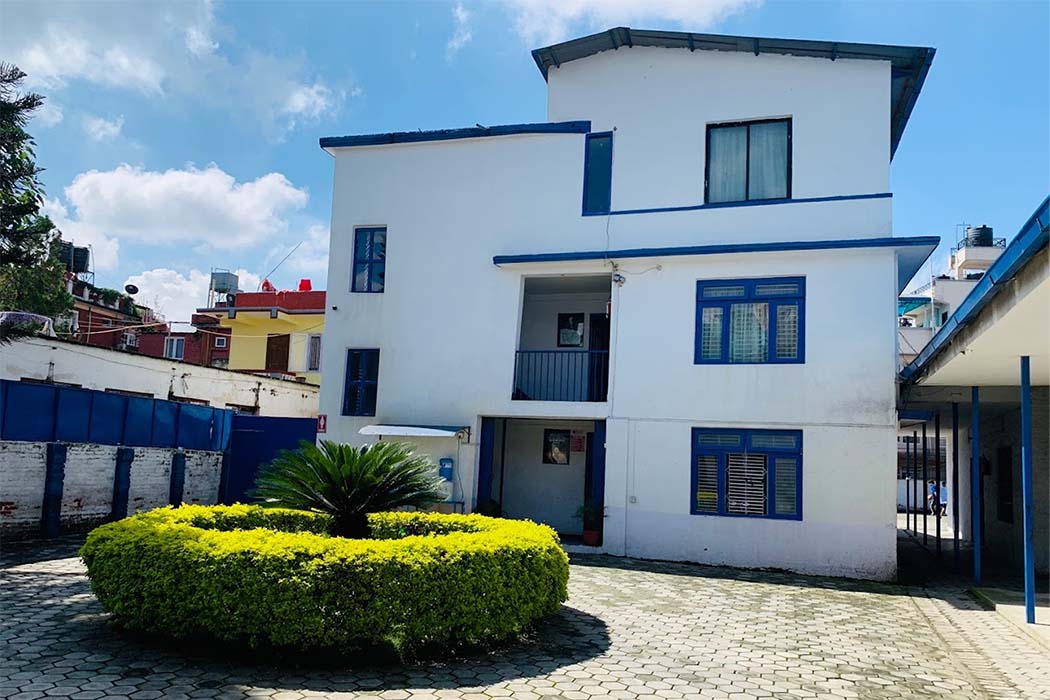
| Particular | Details |
|---|---|
| Course | Master of Business Administration |
| Short form | MBA |
| College | Excel Business College |
| Affiliation | Pokhara University |
| Faculty | Faculty of Management Studies |
| Level | Master |
| Duration | 2 years |
| Academic structure | 6 trimesters |
| Total credits | 60 credit hours |
| Minimum admission qualification | Bachelor’s degree with required academic standing |
| Location | Lakhechaur Marg, New Baneshwor, Kathmandu |
| Evaluation | 60% internal and 40% trimester-end evaluation |
| Minimum graduation CGPA | 3.0 |
The normal duration is 24 months. Pokhara University allows a maximum period of four years for completion of the MBA program, subject to its academic regulations. Each trimester consists of 12 teaching weeks excluding examinations.
The MBA curriculum builds management study progressively rather than placing specialization at the beginning. Students first work through accounting, statistics, economics, organizational behavior, human resource management, financial management, quantitative decision-making, operations, marketing, research, information systems, communication, entrepreneurship, leadership, and strategy.
The later trimesters introduce concentration and elective choices along with an industry or research pathway. The final trimester is devoted to a six-credit internship. The structure combines analytical study with management practice, presentations, case work, group activities, projects, practicums, and supervised workplace experience.
The 60-credit MBA is divided into the following academic components:
| Curriculum component | Credits |
|---|---|
| Foundation and Analytical Courses | 16 |
| Management Core and Functional Courses | 20 |
| Concentration Courses | 8 |
| Elective Courses | 4 |
| Capstone Project and Experiential Learning / Graduate Thesis | 6 |
| Internship | 6 |
| Total | 60 |
Students complete 25 courses covering regular, concentration, elective, and practicum study, followed by capstone and experiential work and internship.
| Trimester | Courses and academic components | Credits |
|---|---|---|
| Trimester I | Accounting for Managerial Decisions, Statistics for Managers, Managerial Economics, Organizational Behavior and Human Resource Management, Organizational Behavior and Human Resource Management Practicum | 10 |
| Trimester II | Financial Management, Quantitative Methods for Decision Making, Macroeconomics and Global Economy, Operations and Supply Chain Management, Marketing Management, Digital Marketing Practicum | 12 |
| Trimester III | Methods for Business Research and Consultancy, Entrepreneurship and Innovation, Management Information System, Managerial Communication, Leadership, Governance and Ethics, Management Information Systems Practicum, Entrepreneurship and Innovation Practicum | 11 |
| Trimester IV | Business Environment and Strategy, Concentration I, Concentration II, Elective I, Elective II | 11 |
| Trimester V | Concentration III, Concentration IV, Capstone Project and Experiential Learning | 10 |
| Trimester VI | Internship | 6 |
The first three trimesters establish the common management base. Concentration and elective study becomes prominent in the fourth and fifth trimesters, while the sixth trimester is allocated to internship.
Students complete four concentration courses worth two credits each, giving a total of eight concentration credits. The four courses are selected from one concentration area.
Available concentration areas are:
Finance
Marketing
Human Resource Management
Information Technology and Business Analytics
Entrepreneurship and Innovation
Finance concentration options cover subjects including Financial Institutions and Markets, Corporate Finance, Investment Management, International Financial Management, Entrepreneurial Finance, Financial Derivatives and Risk Management, Private Equity and Venture Capital, Behavioral Finance, Financial Planning and Wealth Management, Financial Modeling and Valuation, Risk Management and Insurance, and Seminar in Finance.
Marketing choices include Service Marketing, Marketing Research and Analytics, Consumer Behavior, Integrated Marketing Communications, International Marketing, Neuro Marketing, Brand Management, Digital and Social Media Marketing, Sales and Distribution Management, and Seminar in Marketing.
Students choosing Human Resource Management can study areas such as Talent Acquisition and Development, Compensation Management, HRD Strategies, Advanced Leadership and Negotiation, Employee Relations and Conflict Resolution, Performance Management, International Human Resource Management, Labor Relations and Employment Law, and Employer Brand Management.
This concentration covers subjects such as Electronic Commerce, Digital Economy, Digital Business Ecosystem, Data Mining and Business Analytics, Data Analytics for Decision Making, Information Security for Business, Business Intelligence and Data Analytics, AI for Business Systems, Social Analytics for Business Managers, Data Visualization, and Digital and Social Media Marketing.
The Entrepreneurship and Innovation concentration includes Open Innovation and Collaboration, Management of Innovation and Creativity, Scaling Operations and Managing Growth, Legal Aspects of Entrepreneurship, Family Business Management, Corporate Development: Mergers & Acquisitions, Corporate Entrepreneurship, Development of New Business Model and Product, Electronic Commerce and Digital Economy, and Technology Entrepreneurship.
MBA students complete four elective credits. Elective choices extend the curriculum into sector-specific and applied management subjects.
Options include areas such as:
ESG and Sustainability in Business
Digital Economy
Econometrics
Behavioral Economics
Monetary Economics
Tourism and Hospitality Management
Bank Operations and Management
Real Estate Management
Management of Technology
Business Tax Planning
Project Management
Multinational Management
Social Entrepreneurship
Management of Service Sector Organizations
Microfinance
The elective structure also contains selected practicum, seminar, and lab options.
The fifth trimester allows students to choose between an industry-oriented pathway and a research pathway.
Students choosing the industry pathway complete:
Consulting Project or New Venture Creation – 3 credits
Doing Business in Nepal – 3 credits
The Consulting Project is designed around an applied organizational or business issue. Students work on identifying and analyzing the issue and developing recommendations using concepts studied across the MBA curriculum.
New Venture Creation provides an alternative within the same industry pathway.
Students choosing the research pathway complete a six-credit Graduate Thesis in an approved area of management.
The thesis includes a research report, viva-voce examination, and seminar presentation. Thesis assessment gives 75% weight to the research report and 25% to the viva.
The sixth trimester contains a six-credit internship. Students complete three months of supervised work experience with an approved employer under the supervision of a faculty member and a workplace supervisor.
Internship requirements include:
Meeting specified learning objectives
Completing three months of satisfactory work experience
Maintaining a weekly work and learning journal
Preparing the required final paper
Submitting an internship report
Completing an internship presentation
Internship evaluation allocates 40% to the confidential assessment from the host organization and 60% to presentation of the internship project report in a seminar.
Eligibility: Applicants must have completed at least 15 years of formal education, consisting of 12 years of schooling followed by at least three years of bachelor’s-level study. Graduates from all disciplines may apply.
Applicants must have obtained at least:
CGPA 2.0 at bachelor’s level, or
45% at bachelor’s level
Applicants must pass the admission test conducted by Excel Business College. Successful candidates proceed through the college’s selection process, which includes group discussion and interview.
Final admission is based on performance in the admission test, group discussion, and interview.
Required documents include:
Completed and signed MBA application form
Letters of reference from two referees
Attested copies of academic transcripts from SLC onwards
Attested copies of character certificates from SLC onwards
Original migration certificate of the last degree
Equivalent certificate where applicable for a qualification from a foreign university
Attested copy of citizenship
Two recent passport-size photographs
MBA students must attend at least 80% of the classes actually held in a course to become eligible for the trimester-end examination.
Pokhara University follows a continuous evaluation system, so class participation, assignments, project work, case analysis, quizzes, presentations, and other course activities can contribute to academic assessment.
MBA assessment consists of:
Internal evaluation: 60%
Trimester-end evaluation: 40%
Students must obtain the required passing standard separately in internal and trimester-end evaluation. The pass mark for each component is 60%. Seminars, practicums, and lab-related courses may be evaluated entirely through internal assessment.
Pokhara University follows a four-point letter grading system.
| Marks | Grade | Grade point |
|---|---|---|
| Above 90 | A | 4.0 |
| 85–90 | A- | 3.7 |
| 80–85 | B+ | 3.3 |
| 75–80 | B | 3.0 |
| 70–75 | B- | 2.7 |
| 65–70 | C+ | 2.3 |
| 60–65 | C | 2.0 |
| Below 60 | F | 0.0 |
To earn the MBA degree, a student must complete all required courses, the selected industry or research pathway, and internship within the permitted study period. A minimum C grade is required in each course, and the student must maintain a final CGPA of at least 3.0.
Scholarship consideration for the first trimester takes account of performance at the previous academic level, entrance test, group discussion, and interview.
From the second through sixth trimesters, scholarships are based on the previous trimester’s result. The university or college topper is eligible for a 50% tuition-fee waiver. Where two or more students share the top position, the scholarship is distributed on a pro-rata basis. A student may receive only one scholarship at a time.
MBA students study within Excel Business College’s management-focused academic environment in New Baneshwor. Teaching activities include classroom discussions, case studies, presentations, group work, assignments, projects, workshops, guest lectures, and other application-oriented activities.
Students also have access to the college library, computer laboratory, internet facilities, technology-supported classrooms, and research and placement support. The college organizes field visits, seminars, workshops, and other activities alongside formal academic study.
The MBA curriculum covers functional management, quantitative analysis, finance, marketing, operations, human resource management, information systems, entrepreneurship, strategy, leadership, research, and specialized concentration study.
The industry and research pathways allow students to approach the latter part of the degree differently. One route emphasizes consulting or venture-related project work, while the other centers on an independent graduate thesis. Career direction after the MBA depends on a student’s concentration, previous education, experience, skills, performance, and employer requirements.
The MBA is a two-year postgraduate program structured across six trimesters.
The MBA program is affiliated with Pokhara University under its Faculty of Management Studies.
Students must complete 60 credit hours, including foundation and analytical courses, management courses, concentrations, electives, capstone work, and internship.
Applicants need at least 15 years of formal education and must have secured a minimum CGPA of 2.0 or 45% at bachelor’s level.
Yes. Graduates from all disciplines may apply if they meet the required academic qualifications.
The concentration areas are Finance, Marketing, Human Resource Management, Information Technology and Business Analytics, and Entrepreneurship and Innovation.
Yes. Students may select the research pathway and complete a six-credit Graduate Thesis.
Yes. The industry pathway includes either a Consulting Project or New Venture Creation together with Doing Business in Nepal.
Yes. The sixth trimester includes a six-credit internship requiring three months of supervised workplace experience.
Regular coursework generally carries 60% internal evaluation and 40% trimester-end evaluation.
Students must maintain a minimum final CGPA of 3.0 and obtain at least a C grade in each required course.
Yes. First-trimester scholarship consideration is linked to previous academic performance and the admission process. From the second to sixth trimester, the university or college topper is eligible for a 50% tuition-fee waiver.