College of Natural Resource Management, Marin, Kapilakot, Sindhuli (CNRM Sindhuli) is a constituent college of Agriculture and Forestry University (AFU), Nepal. It was established as AFU's second constituent college following the university senate meeting held on 5 Baisakh 2074.
Located in Marin Rural Municipality-7, Kapilakot, Sindhuli, Bagmati Province, the college offers undergraduate education in agriculture. The Bachelor of Science in Agriculture (B.Sc. Ag) has been offered since the academic year 2074/075. Admission and course delivery follow the academic provisions of Agriculture and Forestry University.
| Field | Details |
|---|---|
| College | College of Natural Resource Management, Marin |
| Short Name | CNRM Sindhuli |
| Location | Marin Rural Municipality-7, Kapilakot, Sindhuli |
| Province | Bagmati Province, Nepal |
| Institution Type | Constituent college |
| Affiliation | Agriculture and Forestry University (AFU) |
| Established | 2074 BS (2017 AD) |
| Academic Level | Bachelor's |
| Program | Bachelor of Science in Agriculture (B.Sc. Ag) |
| Duration | 4 years / 8 semesters |
| Admission Basis | AFU entrance examination and merit |
College of Natural Resource Management, Marin was established as the second constituent college of Agriculture and Forestry University (AFU). The decision was made through the AFU senate meeting held on 5 Baisakh 2074.
The formal opening ceremony took place on 3 Falgun 2074. Former Prime Minister Pushpa Kamal Dahal (Prachanda) inaugurated the college, participated in the foundation-laying ceremony for the college building, opened a classroom, and addressed B.Sc. Agriculture students on agricultural education in Nepal.
The college began bachelor's-level agriculture education from the academic year 2074/075.
CNRM Sindhuli is also listed on Collegenp as College of Natural Resource Management, Marin, Sindhuli.
CNRM Sindhuli is situated in Marin Rural Municipality-7, Kapilakot, Sindhuli, Bagmati Province. It is approximately 26 km west of Sindhulimadi, the district headquarters of Sindhuli.
The college lies along the Hetauda-Dharan-Chatara highway corridor, which was associated with the proposed Madan Bhandari Highway during the college's establishment period.
Its location places the college within the Marin area of Sindhuli and connects it with the regional road network.
The college offers the Bachelor of Science in Agriculture at the undergraduate level.
| Program | Duration | Structure |
|---|---|---|
| Bachelor of Science in Agriculture (B.Sc. Ag) | 4 years | 8 semesters |
The Bachelor of Science in Agriculture (B.Sc. Ag) at CNRM Sindhuli follows the academic course provisions of Agriculture and Forestry University.
The program includes theory and practical study under the AFU academic framework. Practical agricultural activities are associated with areas such as agronomy, horticulture, fishery, and animal husbandry.
Admission to the B.Sc. Agriculture program is based on the entrance examination conducted by Agriculture and Forestry University and selection according to merit.
Applicants are required to have completed 10+2 Science with:
Compulsory English
Physics
Mathematics
Chemistry
Biology
A minimum of 50% marks in aggregate from a recognized university or board
Admission provisions also include preferences associated with reserved quotas for female students, students from disadvantaged groups, and local applicants from the area where the college is situated.
Students must maintain at least 70% attendance in each subject in both theory and practical components to become eligible for final examinations.
Teachers maintain attendance records for their classes, and the registers are submitted to the principal after classes. Regular participation in both theory and practical sessions is therefore part of the examination eligibility requirement.
Student performance follows the grading structure below:
| Grade | Marks Obtained |
|---|---|
| A | 80% and above |
| B | 65% to below 80% |
| C | 50% to below 65% |
| D | 40% to below 50% |
The college's mission focuses on education, research, and extension in agriculture and other areas of natural resource management.
Its objectives include:
Producing technically competent human resources in agriculture who can apply knowledge and skills to national development.
Strengthening teaching, research, and extension in agriculture.
Supporting faculty members and students in research and scholarly activities related to agricultural needs.
Encouraging student self-development, responsibility, and commitment to Nepalese society.
These objectives connect academic instruction with research, practical learning, and extension activities.
The long-term strategy of CNRM Sindhuli is centered on its teaching and research functions.
Its stated priorities include:
Strengthening teaching activities.
Expanding research in agriculture, animal science, and forestry.
Extending research findings, agricultural information, and related knowledge.
The strategy reflects the college's role in agricultural education while placing research and extension alongside classroom learning.
The proposed master plan for the college premises covers 5.5 hectares divided into two plots.
A 2-hectare area was planned for the academic complex, while 3.5 hectares was planned for a practical farm complex. The farm plan covers:
Horticulture
Agronomy
Fishery
Animal husbandry
The college also leased around 15 kattha, approximately 0.5 hectare, for practical activities during its earlier operating period.
Additional land was proposed through Marin Rural Municipality and Hariharpur Gadhi Rural Municipality for fruit orchards, seed-production blocks, animal science, fishery, and staff accommodation.
The planned land use combines space for academic buildings with areas intended for field-based agricultural study.
During its initial operating stage, CNRM Sindhuli conducted classes in a building made available by Marin Multiple College.
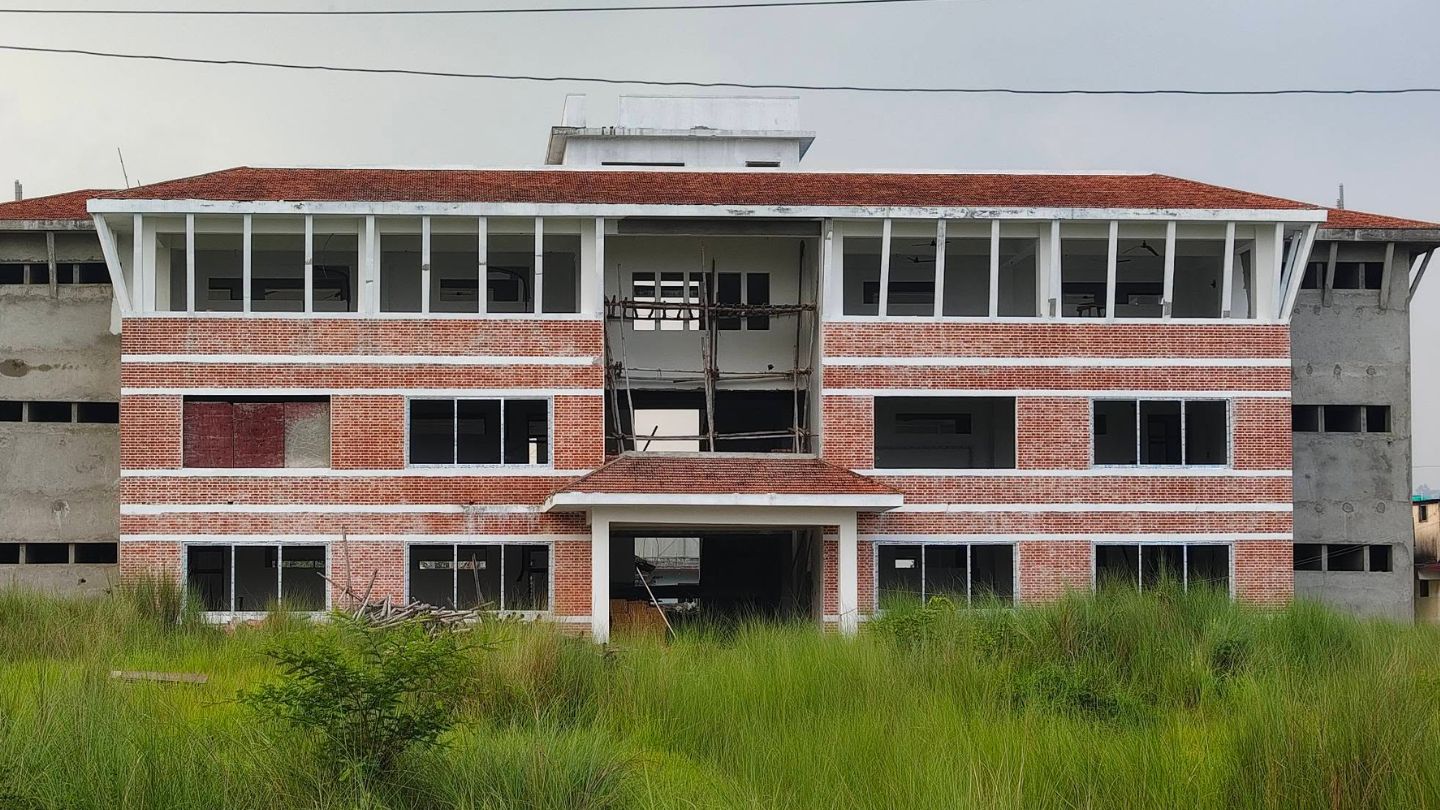
Plans for a dedicated academic and administrative complex were developed alongside the campus master plan. The planned development included academic buildings, administrative space, practical farm areas, and other land for agriculture-related activities.
Before government-approved staffing positions, or darbandi, were established, the college operated through internal resources with support connected to the central government, provincial government, and local governments.
During the early stage of the college, 45 students were enrolled in the B.Sc. Agriculture program.
The initial student group included:
20 female students
25 male students
Students from 30 districts of Nepal
This enrollment accompanied the beginning of bachelor's-level agriculture education at the college from the academic year 2074/075.
CNRM Sindhuli focuses on undergraduate agriculture education under Agriculture and Forestry University.
Its academic structure connects formal coursework with practical agricultural activities. Planned practical areas cover multiple branches of agriculture, while the institutional objectives also give attention to research and extension.
Students in the B.Sc. Agriculture program study under university-prescribed academic provisions that include coursework, practical components, attendance requirements, assessment, and grading.
CNRM Marin was established in 2074 BS as the second constituent college of Agriculture and Forestry University. The AFU senate decision was made on 5 Baisakh 2074.
The college is located in Marin Rural Municipality-7, Kapilakot, Sindhuli, Bagmati Province, Nepal. It is approximately 26 km west of Sindhulimadi.
CNRM Sindhuli is a constituent college of Agriculture and Forestry University (AFU), Nepal.
The college offers the Bachelor of Science in Agriculture (B.Sc. Ag) at the undergraduate level.
The B.Sc. Agriculture program runs for four years and is organized into eight semesters.
Admission is based on the entrance examination conducted by Agriculture and Forestry University, followed by selection on merit.
Students must maintain at least 70% attendance in each subject for both theory and practical components to be eligible for final examinations.
The practical farm plan includes horticulture, agronomy, fishery, and animal husbandry, along with proposed areas for fruit orchards and seed production.